In California premises liability cases, everything turns on one foundational question:
Was there a dangerous condition of the property?
Property owners and insurance companies often try to downplay hazards as “minor,” “temporary,” or “not really dangerous.” California law rejects that framing. A condition does not need to be dramatic, broken, or visually extreme to be legally dangerous.
The Legal Definition of a Dangerous Condition
Under California premises liability law, a dangerous condition is not defined by how obvious or unsightly it appears, but by the risk it creates.
A dangerous condition of property exists when a condition creates a substantial risk of injury to people using the property in a reasonably foreseeable way — and that risk could have been reduced through reasonable repair, maintenance, or warning.
In other words, the legal focus is on foreseeable risk and preventability, not aesthetics or hindsight.
A Condition Does Not Have to Be Permanent
One of the most common defenses property owners raise is that a hazard was “temporary.”
Temporary conditions can still qualify as dangerous conditions, including:
- Spilled liquids
- Pooled water
- Loose debris
- Recently damaged pavement
If a condition existed long enough that it should have been discovered and addressed through reasonable inspections, it may still create liability.
Common Examples of Dangerous Conditions
Dangerous conditions often arise from routine maintenance failures, such as:
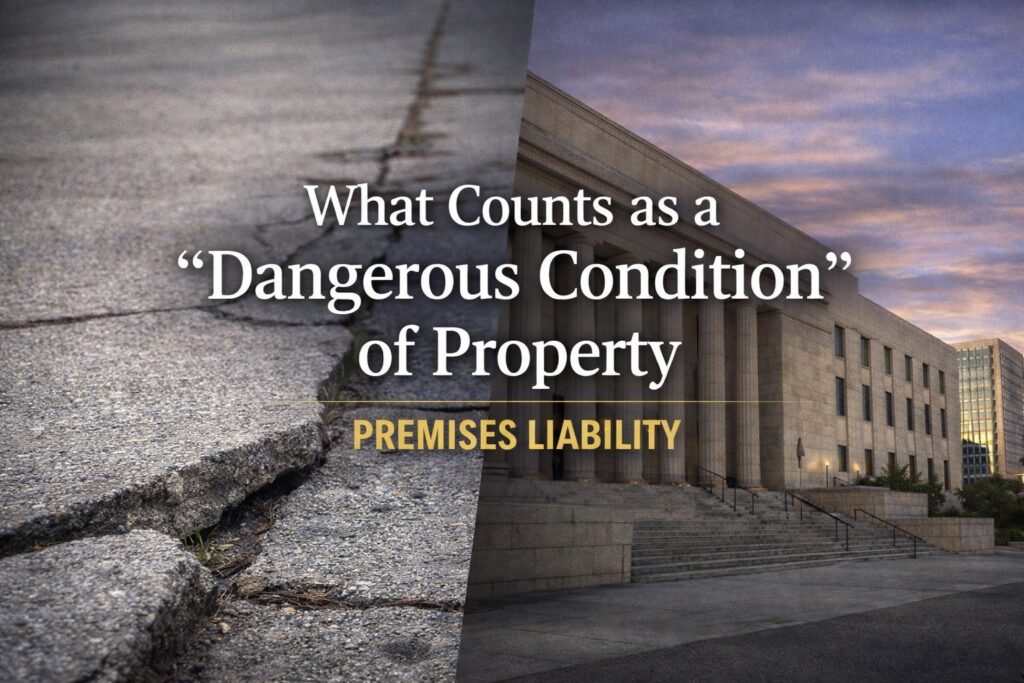
- Uneven sidewalks or broken pavement
- Cracked or unstable stairs
- Loose or missing handrails
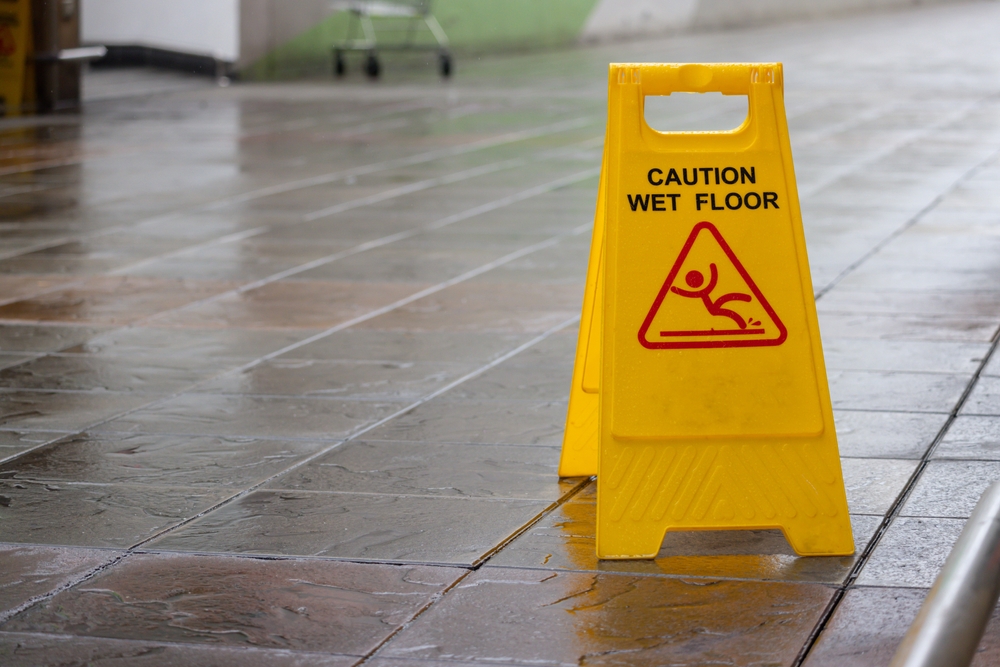
- Slippery floors without adequate warning
- Obstructed walkways
- Missing or defective guardrails
The question is not whether the condition was unsightly, but whether it posed an unreasonable risk to people using the property as intended.
Poor Lighting Can Itself Be a Dangerous Condition
Lighting issues are among the most litigated premises liability hazards.
Inadequate lighting can:
- Conceal defects or changes in elevation
- Prevent safe navigation
- Increase the likelihood of falls or criminal activity
Even when the walking surface itself is intact, poor lighting can transform an otherwise ordinary area into a dangerous condition.
Code Violations Are Powerful Evidence — But Not Required
Violations of building, safety, or accessibility codes often strengthen premises liability claims. Examples include:
- Noncompliant stairs or ramps
- Improper handrail height or spacing
- ADA violations affecting safe access
However, a property may still contain a dangerous condition even if it technically complies with applicable codes. Code compliance is evidence — not immunity.
The “Open and Obvious” Argument Does Not End the Analysis
Property owners often argue that a hazard was “open and obvious.”
That argument does not automatically defeat liability.
A condition may still be dangerous when:
- Visitors are reasonably distracted
- The property layout forces exposure to the hazard
- No safer alternative path exists
California law recognizes that people are entitled to use property without constantly scanning for hidden dangers.
Dangerous Conditions Created by Design or Layout
Not all dangerous conditions result from disrepair. Some arise from how a property is designed or configured.
Examples include:
- Poorly designed stairways
- Blind corners in walkways or parking structures
- Confusing traffic flow patterns
- Inadequate separation between pedestrians and vehicles
Design choices that foreseeably increase injury risk can qualify as dangerous conditions.
Who Can Be Responsible for a Dangerous Condition?
Liability depends on control, not merely ownership.
Potentially responsible parties may include:
- Property owners
- Property management companies
- Commercial tenants
- Maintenance or security contractors
Multiple parties can share responsibility when more than one had the ability to correct or warn of the condition.
Evidence Used to Prove a Dangerous Condition
Proving a dangerous condition often requires:
- Photographs or video of the hazard
- Lighting and visibility evidence
- Maintenance and inspection records
- Prior complaints or incident reports
- Expert analysis explaining why the condition was unsafe
Early documentation matters because conditions are frequently repaired after an incident.
How WIN Injury & Accident Trial Lawyers Proves Dangerous Conditions
At WIN Injury & Accident Trial Lawyers, we focus on showing risk, foreseeability, and preventability.
Our approach includes:
- Immediate site inspections
- Preservation of evidence before it disappears
- Identification of all responsible parties
- Use of experts to explain why a condition was unreasonably dangerous
We don’t allow dangerous conditions to be minimized as “minor inconveniences.”
Injured Because of a Dangerous Property Condition? Don’t Let It Be Dismissed.
If you were injured on unsafe property, the issue is not how the condition looked — it’s whether it created an unreasonable risk that should have been addressed.
📞 Contact WIN Injury & Accident Trial Lawyers for a free consultation.
We’ll evaluate the condition, preserve the evidence, and fight to hold the responsible parties accountable.
Get Help From WIN Injury & Accident Trial Lawyers
Why Legal Representation Matters
Insurance companies often undervalue pain and suffering—offering minimal settlements that ignore your daily struggles. A skilled attorney can:
- Present powerful evidence of your emotional and physical suffering
- Retain expert witnesses to quantify your losses
- Use verdict data to justify higher multipliers or per diem rates
- Argue your case persuasively before a jury
At WIN Trial Lawyers, our team fights to ensure that your recovery reflects the full extent of your suffering—not just your bills.

At WIN Trial Lawyers, we know how personal injury claims can be can be. Victims often face mounting medical bills, lost wages, and emotional trauma. Our team has successfully taken on insurance companies and third parties, recovering millions for injured clients.
If you or a loved one has been injured in an accident, don’t leave your future in the hands of the insurance company. You need experienced trial lawyers who know how to prove liability and fight for maximum compensation.
If you or a loved one has been injured, don’t face this alone. The sooner you act, the stronger your case will be.