


Whiplash — a neck/soft-tissue injury often caused by rear-end collisions — is one of the most common injuries in car accidents. But when your client asks, “What can I expect to get paid for whiplash?” there’s no one-size-fits-all answer. Instead, settlement amounts vary widely depending on severity, medical treatment, liability, and other case-specific factors.
That said, reviewing recent data and prevailing industry practices offers useful guidance for clients and attorneys alike.
Typical Settlement Ranges for Whiplash in California
Although every case differs, many recent estimates from California law firms show the following rough ranges for whiplash/soft tissue injury claims:
| Injury / Severity | Common Settlement Range* |
|---|---|
| Mild whiplash / soft tissue injury, minimal treatment or short-term symptoms | ~$2,500 – $15,000 |
| Moderate whiplash requiring medical care (e.g. physical therapy, imaging), some recovery time and documented impairment | ~$15,000 – $50,000 |
| More serious whiplash — prolonged symptoms, nerve involvement, lost wages or more intensive treatment | ~$50,000 – $100,000+ |
| Well-documented moderate-to-severe whiplash in California (per one 2025 summary) | ~$7,500 – $50,000 (with “average” around $35,000) (via LawLinq) |
*These ranges are not guarantees. Each case turns heavily on its facts.
Some firms emphasize there is no fixed “average” for whiplash settlements — what really matters is the full context of the injury, treatment, and losses.
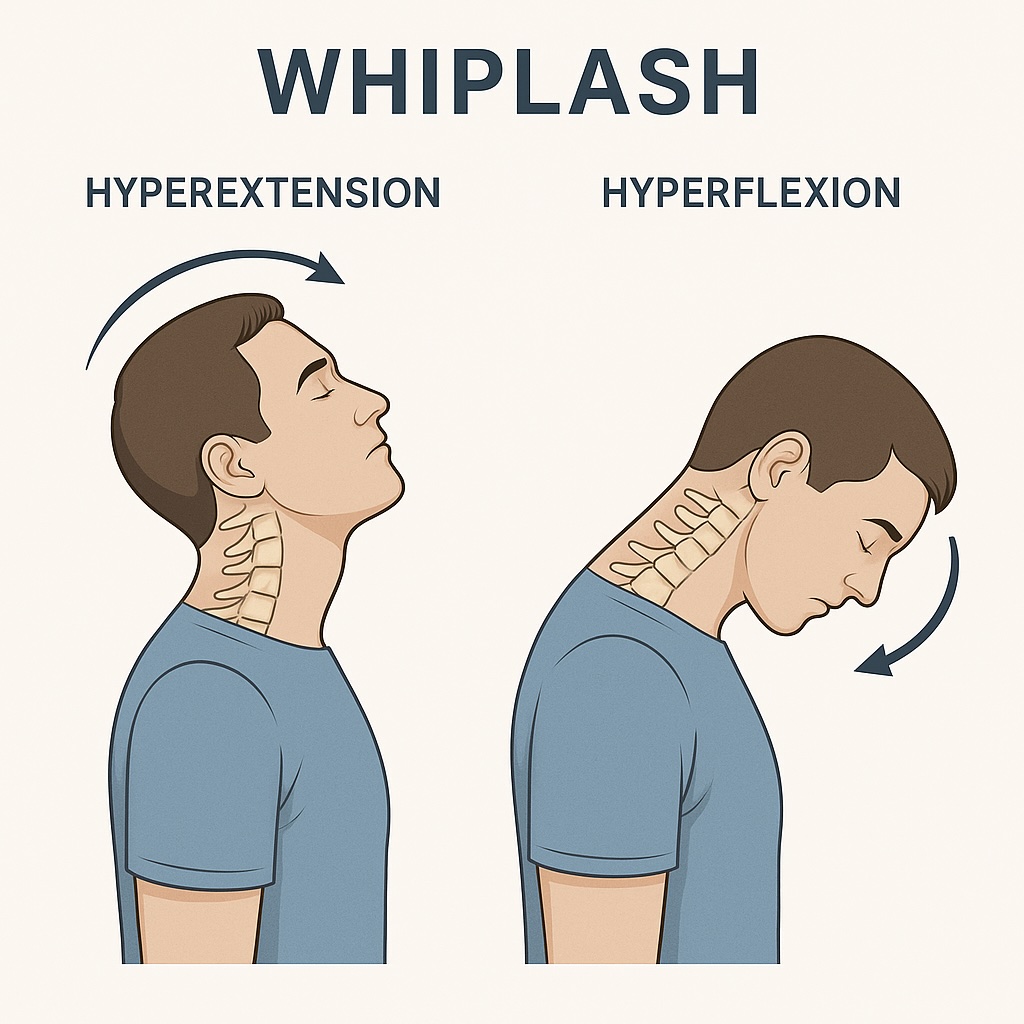
What Happens Medically During a Whiplash Injury?
During a rear-end or sudden-impact collision, the body is pushed forward while the head momentarily lags behind. This creates a rapid “S-curve” motion through the cervical spine. In the first phase, the neck goes into hyperextension as the head snaps backward; fractions of a second later, the head rebounds forward into hyperflexion.
This violent, rapid motion can strain or tear muscles, tendons, and ligaments in the neck, irritate or compress cervical nerves, and cause joint dysfunction in the facet joints. Even without visible damage on X-rays, the soft-tissue trauma can lead to significant pain, stiffness, headaches, dizziness, and reduced range of motion. Symptoms often appear hours or days after the crash, making early medical evaluation essential.
What Influences the Settlement Value — Key Factors
Why do some whiplash cases settle in the low thousands, while others approach or exceed six figures (especially when long-term injuries or nerve damage are involved)? The main factors:
- Severity of the injury & documented medical treatment: Mild soft-tissue strains with minimal treatment tend to yield lower settlements; extended therapy, imaging records (e.g. MRI), evidence of nerve involvement, or chronic pain raise value dramatically.
- Pain and suffering, quality-of-life impact, lost wages: When the accident causes lasting pain, limits work ability, or impairs daily life, those non-economic damages add significantly to the claim.
- Clear liability / fault: Whiplash claims settle for more when fault is obvious (e.g., rear-end collision) and liability is not heavily disputed.
- Prompt and consistent medical documentation: Early emergency-room visits, consistent follow-up care, physical therapy/chiropractic records strengthen credibility with insurers.
- Insurance coverage & policy limits: The at-fault driver’s auto insurance (and any uninsured-/underinsured-motorist policies) can cap recoverable amounts.
Why Whiplash Settlement Averages Are Misleading — And What Clients Should Know
Because whiplash claims are so variable, quoting a single “average” number can be misleading. Some reasons:
- “Soft tissue injury” is a catch-all term — it can cover a minor neck strain that resolves in a week, or a chronic condition with months of therapy and persistent pain.
- Insurers frequently underrate “invisible” injuries like whiplash, offering lowball payouts unless the claimant insists on proper documentation and negotiation.
- The same client might get very different settlement values depending on who represents them, how well documented the case is, and how the insurance adjuster views soft-tissue injuries.
Because of this unpredictability, every whiplash case should be treated on its own merits — with complete documentation, a clear record of medical care, and strategic negotiation.
Advice for Whiplash Claimants — Maximizing the Value of Your Case
If you or someone you represent suffered whiplash in California, here are key steps to maximize potential recovery:
- Seek medical attention immediately, even if symptoms seem minor. Early treatment helps document the injury and shows seriousness.
- Continue with all recommended treatment and therapy — physical therapy, chiropractic, specialist visits, imaging as needed — and keep all records and bills.
- Track all damages — not only medical bills, but lost wages, missed work, diminished earning capacity, and “pain and suffering.”
- Document daily life impact — maintain a “pain journal” or diary noting how pain/stiffness affects sleep, work, family life, hobbies.
- Consult with experienced personal-injury counsel — whiplash claims often involve subjective injuries; effective legal representation can significantly increase the settlement value.
Conclusion — Whiplash Settlements Are Highly Individualized
For a whiplash injury in a California car accident, expecting a “standard” settlement amount is unrealistic. That said, realistic ballpark ranges — depending on severity and documentation — often fall in the tens of thousands of dollars. Mild soft-tissue cases might settle in the low-to-mid thousands; moderate-to-severe injuries with proper records and tangible impact frequently settle for mid-five figures (or more).
If you or a loved one suffered whiplash, you deserve full and fair compensation for your medical costs, pain and suffering, lost wages, and life disruption — not just the bare minimum. A careful case evaluation by a seasoned personal injury attorney is often the difference between a below-value offer and a just recovery.
Why Choose WIN Trial Lawyers
Our firm combines deep knowledge of California accident law with local familiarity of California’s roads and courts. We know how insurers operate — and how to maximize your recovery through aggressive negotiation and trial readiness.
If you were injured in a car accident, you deserve a team that fights for full compensation — medical costs, lost wages, and pain and suffering.
Learn more
- Car Accident Lawyer Pasadena
- What to Do After a Car Accident in Pasadena
- Back and Spinal Injuries After a Crash

At WIN Trial Lawyers, we know how devastating distracted driving accidents can be. Victims often face mounting medical bills, lost wages, and emotional trauma. Our team has successfully taken on insurance companies and distracted drivers, recovering millions for injured clients.
If you or a loved one has been injured in a speeding-related car accident, don’t leave your future in the hands of the insurance company. You need experienced trial lawyers who know how to prove liability and fight for maximum compensation.
If you or a loved one has been injured in a distracted driving accident, don’t face this alone. The sooner you act, the stronger your case will be.
🔗 Related Posts:
Frequently Asked Questions About Whiplash Settlements in California
What is the average settlement for whiplash injuries in California?
There is no true “average” settlement because whiplash claims vary widely based on severity, treatment, and long-term impact. Minor cases may settle for several thousand dollars, while more serious cases involving prolonged treatment, missed work, or chronic pain can result in five-figure or higher settlements.
Why do whiplash settlements vary so much?
Whiplash is a soft-tissue injury, which means its impact depends heavily on:
- Length and type of medical treatment
- Whether symptoms fully resolve or become chronic
- Time missed from work
- Credibility of medical records
- Strength of evidence linking the injury to the crash
Two people with the same diagnosis can have very different outcomes.
How long does it take to settle a whiplash claim?
Many whiplash claims resolve within a few months, but cases involving ongoing symptoms, delayed recovery, or disputed liability may take six months or longer. Settling too early can significantly undervalue your claim.
Can whiplash lead to chronic pain?
Yes. While many whiplash injuries heal, some victims develop chronic neck pain, headaches, reduced mobility, or nerve symptoms. These cases are often worth more due to long-term impact and continued treatment needs.
What if my X-rays or MRI are normal?
Normal imaging does not mean your whiplash isn’t real. Whiplash often involves muscle, ligament, and soft-tissue damage that does not show up clearly on scans. Medical notes, physical exams, and treatment history are critical.
Does the speed of the accident matter?
Not as much as insurance companies suggest. Whiplash can occur in low-speed collisions, especially rear-end accidents. The mechanism of injury—not vehicle damage—matters most.
What damages are included in a whiplash settlement?
A whiplash settlement may include compensation for:
- Medical expenses
- Physical therapy and rehabilitation
- Lost wages
- Pain and suffering
- Emotional distress
- Loss of enjoyment of life
If symptoms persist, future medical costs may also be included.
What if I had neck problems before the accident?
A pre-existing condition does not bar recovery. If the accident aggravated or worsened a prior neck condition, you may still recover compensation for the extent of the aggravation.
Can I still recover compensation if the insurance company calls whiplash a “minor injury”?
Yes. Insurance companies routinely downplay whiplash claims, but California law recognizes soft-tissue injuries as compensable. Proper medical documentation and legal strategy are key.
Do I need a lawyer for a whiplash claim?
While minor claims may resolve without representation, insurance companies often undervalue whiplash injuries. An experienced personal injury attorney can:
- Prevent premature settlement
- Coordinate medical documentation
- Push back against insurer minimization
- Maximize pain and suffering damages
What should I do if I think I have whiplash after a car accident?
Seek medical care promptly, follow treatment recommendations, and document symptoms consistently. Early diagnosis and ongoing records are critical for both recovery and compensation.