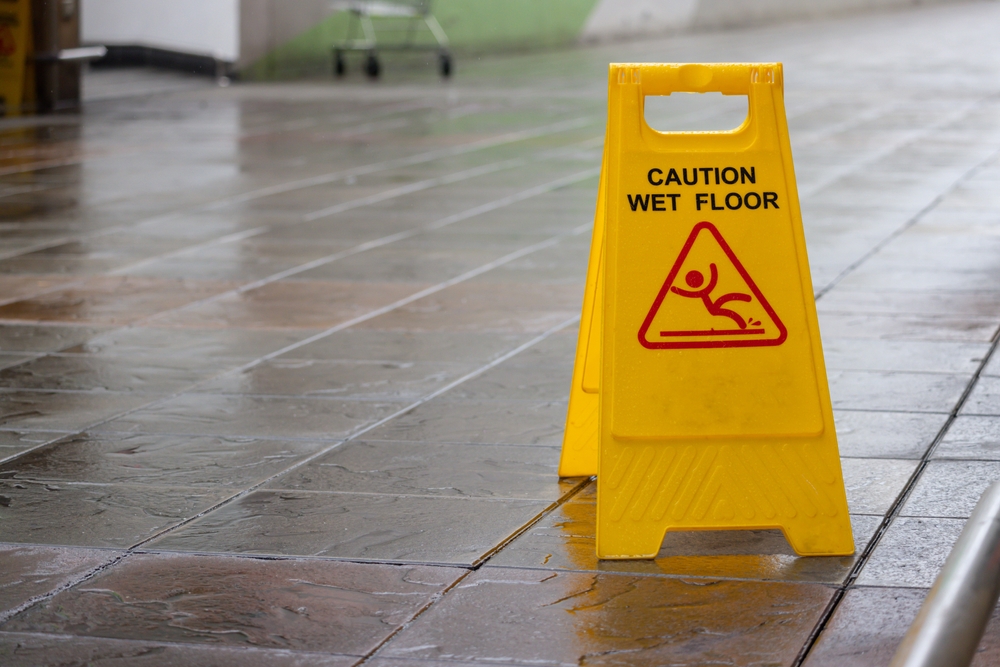

In premises liability cases, property owners often try to limit responsibility by focusing on who the injured person was — not what made the property unsafe.
They’ll argue:
- “They were just a guest.”
- “They weren’t invited.”
- “They shouldn’t have been there.”
California law takes a more nuanced — and more protective — approach. While the status of the injured person matters, property owners cannot ignore dangerous conditions simply because of who was injured.
Why Legal Status Matters in Premises Liability
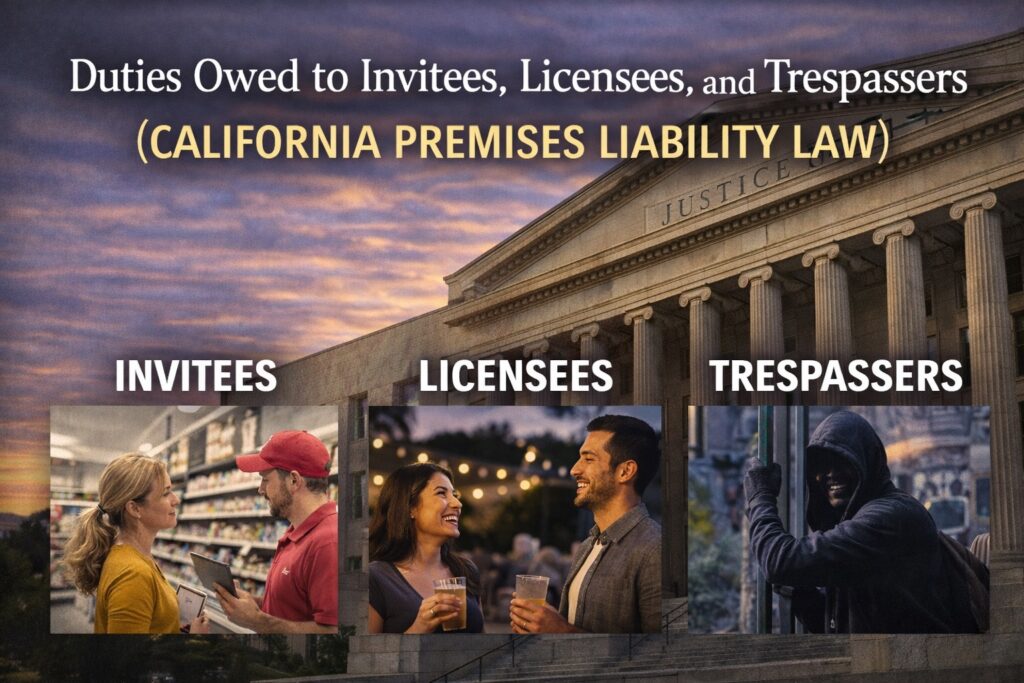
Historically, premises liability law categorized visitors into three groups:
- Invitees
- Licensees
- Trespassers
Each category affects the scope of the duty owed, but none eliminates a property owner’s responsibility to act reasonably under the circumstances.
Invitees: The Highest Duty of Care
An invitee is someone who enters property for a purpose connected to the owner’s business or the property’s intended use.
Common examples include:
- Customers in stores or shopping centers
- Tenants and their guests in common areas
- Employees and contractors
- Patrons at hotels, restaurants, or venues
Duty Owed to Invitees
Property owners owe invitees the highest duty of care. This includes a duty to:
- Regularly inspect the property
- Discover unsafe conditions
- Repair dangerous conditions within a reasonable time
- Warn of hazards that cannot immediately be fixed
Invitees are entitled to assume the property has been made reasonably safe for its intended use.
Licensees: A Duty to Warn of Known Dangers
A licensee is someone who enters property with permission, but not for the owner’s commercial benefit.
Common examples include:
- Social guests
- Friends or family members
- Certain non-paying visitors
Duty Owed to Licensees
Property owners owe licensees a duty to:
- Warn of known dangerous conditions
- Refrain from creating hazards or acting with reckless disregard
Unlike invitees, owners are generally not required to conduct ongoing inspections for licensees. However, they cannot ignore dangers they already know about.
Trespassers: No Blanket Immunity
A trespasser is someone who enters property without permission.
Property owners often assume they owe no duties to trespassers. That assumption is wrong.
Duty Owed to Trespassers
While duties are more limited, property owners must still:
- Avoid willful or wanton misconduct
- Avoid intentionally causing harm
- Take reasonable steps when a trespasser’s presence is known or reasonably foreseeable
California law does not allow property owners to create or maintain dangerous conditions designed to injure trespassers.
Children and the Attractive Nuisance Doctrine
Children are treated differently under California law.
If a property contains a condition likely to attract children — such as:
- Pools
- Construction sites
- Abandoned equipment
- Dangerous machinery
the owner may owe a duty even if the child was technically trespassing.
This is known as the attractive nuisance doctrine, and it often overrides traditional trespasser rules.
Status Is Not the End of the Analysis
Modern California premises liability law emphasizes reasonableness, not rigid labels.
Courts look at:
- Foreseeability of harm
- The burden of preventing injury
- The owner’s knowledge of the condition
- The injured person’s reason for being on the property
A property owner cannot escape liability simply by re-labeling an injured person’s status.
Common Defense Tactics Involving Visitor Status
Property owners frequently argue:
- “They were only a licensee, not an invitee.”
- “They were trespassing.”
- “They exceeded the scope of permission.”
These arguments often fail when:
- The presence was foreseeable
- The hazard posed a serious risk
- The cost of prevention was minimal
Status affects duty — it does not eliminate it.
How WIN Injury & Accident Trial Lawyers Approaches Duty Issues
At WIN Injury & Accident Trial Lawyers, we don’t let defendants hide behind labels.
Our approach includes:
- Analyzing foreseeability and control
- Demonstrating how reasonable safety measures could have prevented harm
- Showing that visitor presence was expected or foreseeable
- Neutralizing “status-only” defenses
We focus on conduct and risk, not technical labels.
Injured on Someone Else’s Property? Status Alone Does Not Decide Your Case.
If you were injured on unsafe property, your right to recovery does not turn solely on whether you were labeled an invitee, licensee, or trespasser.
📞 Contact WIN Injury & Accident Trial Lawyers for a free consultation.
We’ll evaluate the duty owed, preserve the evidence, and fight to hold property owners accountable.
Get Help From WIN Injury & Accident Trial Lawyers
Why Legal Representation Matters
Insurance companies often undervalue pain and suffering—offering minimal settlements that ignore your daily struggles. A skilled attorney can:
- Present powerful evidence of your emotional and physical suffering
- Retain expert witnesses to quantify your losses
- Use verdict data to justify higher multipliers or per diem rates
- Argue your case persuasively before a jury
At WIN Trial Lawyers, our team fights to ensure that your recovery reflects the full extent of your suffering—not just your bills.

At WIN Trial Lawyers, we know how personal injury claims can be can be. Victims often face mounting medical bills, lost wages, and emotional trauma. Our team has successfully taken on insurance companies and third parties, recovering millions for injured clients.
If you or a loved one has been injured in an accident, don’t leave your future in the hands of the insurance company. You need experienced trial lawyers who know how to prove liability and fight for maximum compensation.
If you or a loved one has been injured, don’t face this alone. The sooner you act, the stronger your case will be.