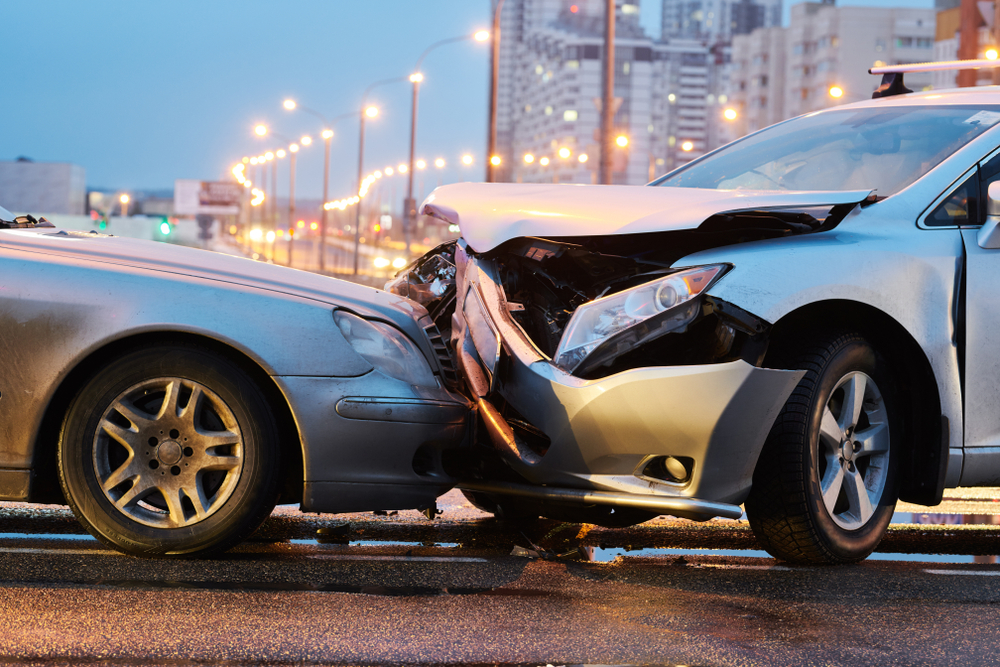

When Bike Lanes Matter — and When Cyclists May Leave Them

Bike lanes are meant to improve safety — but they are also one of the most misunderstood parts of California traffic law.
Drivers often assume cyclists must always stay in bike lanes, and insurers frequently argue that a cyclist outside a bike lane is automatically at fault. California law says otherwise.
Vehicle Code § 21202 governs when cyclists are generally required to use bike lanes — and, just as importantly, when they are legally allowed to leave them. Misunderstanding this statute is a common source of incorrect fault determinations in bicycle injury cases.
At WIN Injury & Accident Trial Lawyers, VC § 21202 is often central to defeating insurance-company bias and establishing liability in serious cyclist injury claims.
What Vehicle Code § 21202 Actually Requires
Vehicle Code § 21202 provides that a cyclist operating at less than the normal speed of traffic must generally ride within a bike lane, if one is present.
However, the statute contains critical exceptions.
A cyclist may legally leave the bike lane when:
- Passing another bicycle or vehicle
- Preparing for a left turn
- Avoiding hazards (parked cars, debris, doors, drainage grates, construction)
- When the bike lane is blocked or unsafe
- When approaching a place where a right turn is authorized
Key takeaway:
Bike lanes are not absolute mandates. The law prioritizes safety over rigid lane use.
Common Misconceptions About Bike Lane Violations
Many drivers — and insurers — get VC § 21202 wrong.
Common myths include:
- “Cyclists must always stay in bike lanes” ❌
- “Leaving the bike lane is illegal” ❌
- “If a cyclist wasn’t in the bike lane, they’re at fault” ❌
In reality, VC § 21202 expressly allows cyclists to leave bike lanes in many everyday situations.
Why Bike Lane Violations Are a Major Liability Issue
Bike-lane-related crashes often occur when:
- Drivers merge into bike lanes without looking
- Vehicles block or encroach on bike lanes
- Cyclists move out of bike lanes to avoid hazards
- Drivers open doors into bike lanes (“dooring” accidents)
These crashes frequently cause:
- Whiplash and soft-tissue injuries
- Herniated or bulging discs
- Traumatic brain injuries (TBI)
- Spinal cord injuries
- Shoulder and knee injuries
- Chronic pain and disability
Negligence Per Se and Vehicle Code § 21202
Violations of bike-lane laws often support negligence per se — but not in the way insurers claim.
How Negligence Per Se Actually Works
Negligence per se applies when:
- A driver violates a statute
- The statute was designed to prevent the type of harm that occurred
- The injured cyclist is within the protected class
- The violation caused the injury
Drivers, not cyclists, are often the violators:
- Unsafe merging into bike lanes
- Blocking bike lanes illegally
- Opening doors into bike lanes
- Failing to yield to cyclists lawfully leaving a bike lane
When a cyclist leaves a bike lane lawfully, negligence per se arguments against the cyclist usually fail.
Common Insurance Company Pushback in Bike Lane Cases
Insurers frequently misuse VC § 21202 to shift blame.
“The Cyclist Should Have Stayed in the Bike Lane”
The law allows cyclists to leave bike lanes for safety and maneuvering. This argument often collapses under statutory review.
“The Bike Lane Was There”
Presence of a bike lane does not eliminate the listed statutory exceptions.
“The Cyclist Was Going Too Slow”
Speed arguments must account for traffic flow and safety — not assumptions.
“Comparative Fault Applies Automatically”
Comparative fault is fact-specific and does not arise merely because a cyclist used a traffic lane.
How WIN Proves Bike Lane Liability Cases
Bike-lane cases depend on early documentation.
Key Evidence Includes:
- Photos of the bike lane and hazards
- Vehicle positioning and merge angles
- Door-opening mechanics
- Traffic and dashcam footage
- Witness statements
- City maintenance and lane design records
Preserving the condition of the bike lane is often decisive.
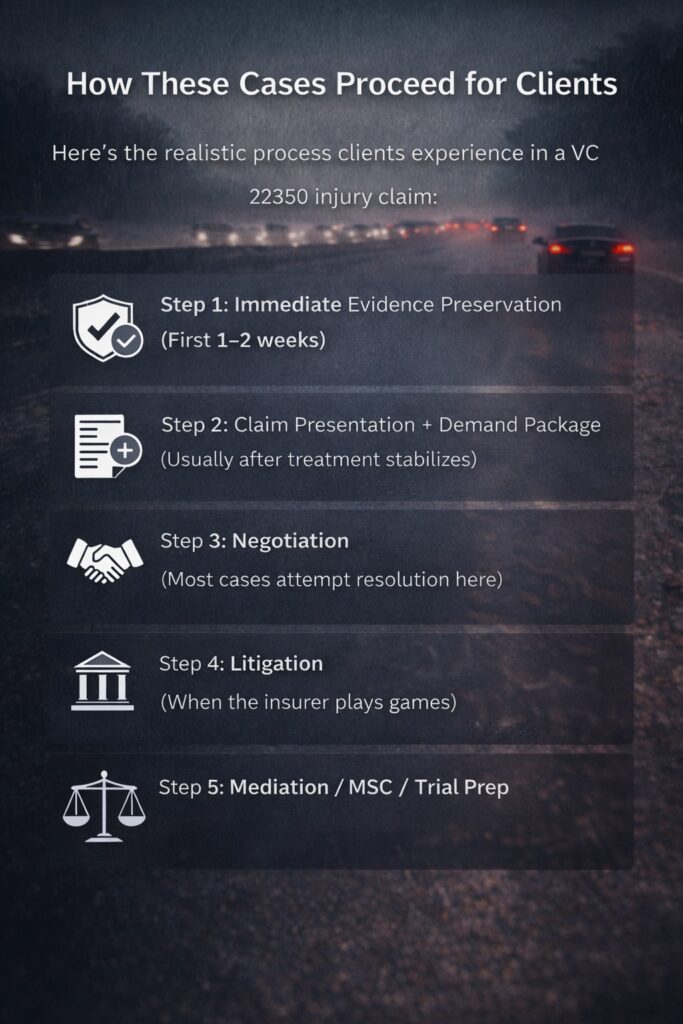
How These Cases Proceed for Clients
Here’s the realistic process clients experience in a VC § 21202 bicycle injury claim:
Step 1: Immediate Evidence Preservation (First 1–2 Weeks)
Bike lanes change. Vehicles move. Hazards disappear. Early documentation matters.
Step 2: Claim Presentation + Demand Package
We assemble:
- Statutory analysis of VC § 21202
- Proof the cyclist was lawfully outside the bike lane (if applicable)
- Medical records and prognosis
- Wage-loss documentation
- A demand grounded in trial value, not cyclist stereotypes
Step 3: Negotiation
Some cases resolve early once insurers understand the statute.
Step 4: Litigation (When Bias Persists)
If insurers resist, we pursue:
- Written discovery
- Depositions
- Expert testimony on cycling safety
- Motions clarifying statutory duties
Step 5: Mediation / Trial Preparation
Most cases settle — but trial readiness drives value.
Do Bike Lane Violation Cases Go to Trial?
They can, particularly when:
- Insurers cling to incorrect interpretations of VC § 21202
- Injuries are severe or permanent
- Cyclist bias drives defense strategy
WIN prepares bike-lane cases as jury cases from day one.
Damages Available in VC § 21202 Cases
Injured cyclists may recover:
- Medical expenses (past and future)
- Lost wages and diminished earning capacity
- Pain and suffering
- Permanent disability or disfigurement
- Wrongful death damages (when applicable)
Serious bike-lane crashes frequently involve six- or seven-figure exposure.
Get Help From WIN Injury & Accident Trial Lawyers
Why Legal Representation Matters
Insurance companies often undervalue pain and suffering—offering minimal settlements that ignore your daily struggles. A skilled attorney can:
- Present powerful evidence of your emotional and physical suffering
- Retain expert witnesses to quantify your losses
- Use verdict data to justify higher multipliers or per diem rates
- Argue your case persuasively before a jury
At WIN Trial Lawyers, our team fights to ensure that your recovery reflects the full extent of your suffering—not just your bills.

At WIN Trial Lawyers, we know how personal injury claims can be can be. Victims often face mounting medical bills, lost wages, and emotional trauma. Our team has successfully taken on insurance companies and third parties, recovering millions for injured clients.
If you or a loved one has been injured in an accident, don’t leave your future in the hands of the insurance company. You need experienced trial lawyers who know how to prove liability and fight for maximum compensation.
If you or a loved one has been injured, don’t face this alone. The sooner you act, the stronger your case will be.
🔗 Related Posts:
Frequently Asked Questions (FAQs)
Frequently Asked Questions – Vehicle Code § 21202
Bike Lane Violations, Cyclist Rights & Injury Liability in California
What does Vehicle Code § 21202 say?
Vehicle Code § 21202 generally requires cyclists traveling slower than the normal speed of traffic to ride within a bike lane when one is present, unless a statutory exception applies.
Are cyclists required to stay in bike lanes at all times?
No. VC § 21202 contains multiple exceptions allowing cyclists to lawfully leave bike lanes for safety and maneuvering.
When can a cyclist legally leave a bike lane?
A cyclist may leave a bike lane when:
- Passing another bicycle or vehicle
- Preparing for a left turn
- Avoiding hazards (parked cars, debris, doors, construction, drainage grates)
- The bike lane is blocked or unsafe
- Approaching a location where a right turn is authorized
Is a cyclist automatically at fault for riding outside a bike lane?
No. Riding outside a bike lane is not negligence by itself if the cyclist was acting within the statutory exceptions.
Do bike lanes eliminate a driver’s duty of care?
No. Drivers still owe cyclists a duty to yield, look, merge safely, and avoid collisions — even when bike lanes exist.
Can drivers legally drive or park in bike lanes?
Generally no. Drivers may not obstruct or encroach into bike lanes except in limited, lawful circumstances.
Are “dooring” accidents related to bike lane violations?
Yes. Opening a car door into a bike lane is a common bike-lane violation and often creates strong driver liability.
Are bike lane crashes dangerous?
Yes. Bike lane crashes often involve sudden vehicle intrusion and result in severe injuries due to a cyclist’s lack of protection.
What injuries are common in bike lane accidents?
Common injuries include traumatic brain injuries, spinal injuries, fractures, internal injuries, severe road rash, and permanent disability.
Is violating VC § 21202 negligence per se?
It depends. Negligence per se typically applies when a driver violates a statute designed to protect cyclists. Cyclists lawfully leaving bike lanes under statutory exceptions are usually not negligent per se.
What is negligence per se in bike lane cases?
Negligence per se means the law presumes negligence because a safety statute was violated and caused the injury.
Can drivers be negligent per se for bike lane violations?
Yes. Drivers who unlawfully block, enter, or interfere with bike lanes often violate statutes intended to protect cyclists.
What if the cyclist was going slower than traffic?
Cyclists may still leave bike lanes for safety reasons even if traveling slower than traffic.
What if the bike lane was poorly maintained?
Poor maintenance, debris, or unsafe design may justify leaving the bike lane and can shift liability to drivers or even government entities.
Can a government entity be liable for bike lane design or maintenance?
In limited cases, yes — but these claims have strict notice deadlines and require early investigation.
Do police reports decide fault in bike lane accidents?
No. Police reports are important but not determinative in civil injury cases.
What evidence is important in bike lane cases?
Key evidence includes photographs of the bike lane and hazards, vehicle positioning, door-opening mechanics, video footage, and witness statements.
Do insurance companies commonly misuse VC § 21202?
Yes. Insurers often argue cyclists “should have stayed in the bike lane” even when the law allows otherwise.
Can comparative fault apply in bike lane cases?
It can, but fault must be based on evidence — not assumptions about bike lane use.
Do bike lane cases often go to litigation?
They can, especially when insurers rely on incorrect interpretations of VC § 21202 or cyclist bias.
Do bike lane cases usually go to trial?
Most settle before trial, but trial readiness often increases settlement value.
What damages can injured cyclists recover?
Damages may include medical expenses, lost wages, future earning capacity, pain and suffering, disability, and wrongful death damages when applicable.
How long do I have to file a bike lane injury claim?
Generally two years from the date of injury, with shorter deadlines for claims involving government entities.
What should I do after a bike lane accident?
Seek medical care, document the bike lane and hazards, preserve photos or video, and consult an experienced injury attorney promptly.
How does WIN Injury & Accident Trial Lawyers handle bike lane cases?
WIN aggressively investigates bike lane crashes, defeats insurer bias, and prepares every case as trial-ready.
Injured in or Near a Bike Lane?
If you were injured in a crash involving a bike lane, fault may turn on Vehicle Code § 21202 — and insurers frequently get it wrong.
WIN Injury & Accident Trial Lawyers knows how to apply bike-lane law correctly, defeat bias-driven defenses, and pursue full compensation — whether through settlement or trial.