
Head-On Collisions, Negligence, and Injury Liability
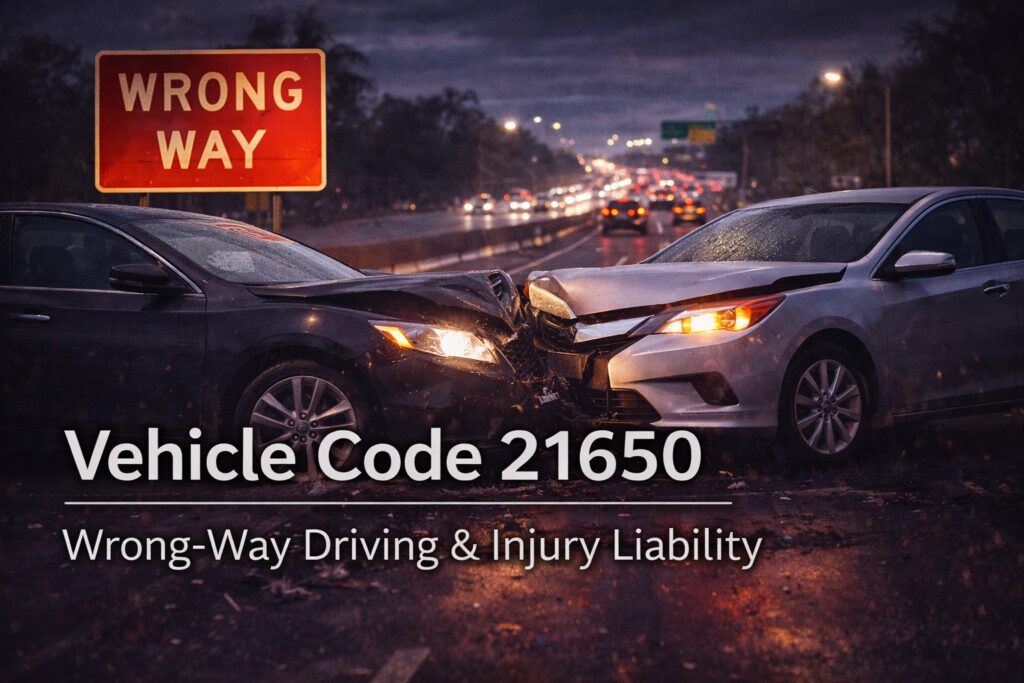
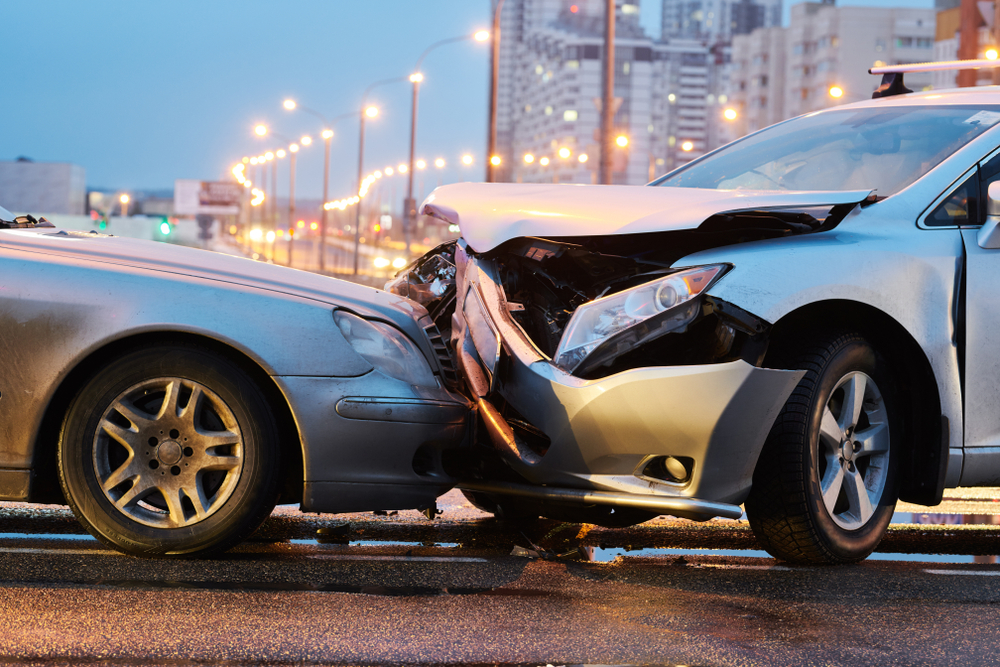
Wrong-way driving accidents are among the most catastrophic crashes on California roads. They often occur at high speeds, leave little time to react, and result in devastating injuries or fatalities.
California law is explicit: drivers must drive on the correct side of the roadway. When a driver travels the wrong way — whether on a freeway, divided highway, or surface street — liability is often clear and severe.
Under Vehicle Code § 21650, wrong-way driving frequently establishes strong statutory negligence in personal-injury and wrongful-death cases. At WIN Injury & Accident Trial Lawyers, these cases are treated as high-exposure matters from day one.
What Vehicle Code § 21650 Requires
Vehicle Code § 21650 provides, in substance, that:
- A vehicle must be driven on the right half of the roadway
- Except where a statute or traffic control device permits otherwise
This rule applies to:
- Freeways and highways
- Divided roadways
- Surface streets
- One-way streets (subject to posted direction)
Key takeaway:
Driving on the wrong side of the road — even briefly — violates California law unless clearly permitted.
Why Wrong-Way Driving Accidents Are So Dangerous
Wrong-way crashes are uniquely dangerous because:
- Closing speeds are extremely high
- Drivers have seconds to react
- Collisions are often head-on or offset head-on
- Safety systems are least effective in opposing-direction impacts
Common injuries include:
- Whiplash and soft-tissue injuries
- Herniated or bulging discs
- Traumatic brain injuries (TBI)
- Spinal cord injuries
- Shoulder and knee injuries
- Chronic pain and disability
Many wrong-way crashes result in multiple critical injuries or deaths.
Negligence Per Se and Vehicle Code § 21650
A violation of Vehicle Code § 21650 frequently supports negligence per se in California injury cases.
How Negligence Per Se Applies
Negligence per se applies when:
- A driver violates a statute
- The statute was designed to prevent the type of harm that occurred
- The injured person is within the class the law was meant to protect
- The violation caused the injury
VC § 21650 exists to prevent head-on and wrong-direction collisions. When a driver travels the wrong way and causes injury, these elements are typically satisfied.
Why This Matters
When negligence per se applies:
- Fault is presumed
- The defense cannot argue the driver was merely “careless”
- The case centers on causation and damages, not liability
This is why wrong-way cases often involve substantial exposure.
Common Causes of Wrong-Way Driving
Wrong-way driving often results from:
- Intoxication (alcohol or drugs)
- Fatigue or confusion
- Entering freeway off-ramps incorrectly
- Ignoring or missing signage
- Medical emergencies
- Disorientation at night
Even when impairment is involved, injured victims still have strong civil claims.

Common Insurance Company Pushback in Wrong-Way Cases
Despite the severity, insurers sometimes attempt to limit exposure.
“The Crash Was Unavoidable”
Wrong-way driving is rarely unavoidable. The conduct itself created the emergency.
“The Other Driver Could Have Avoided It”
Victims traveling the correct direction are rarely at fault when faced with an oncoming vehicle at speed.
“Medical Emergency Defense”
While sometimes raised, medical emergencies must be sudden, unforeseeable, and supported by evidence — and often fail.
“Comparative Fault”
Comparative fault arguments are uncommon and weak in true wrong-way cases.
How WIN Proves Wrong-Way Driving Liability
Wrong-way cases demand immediate, aggressive investigation.
Key Evidence Includes:
- Traffic-camera and freeway-camera footage
- Dashcam and surveillance video
- Police and CHP reports
- Accident-reconstruction analysis
- Event Data Recorder (EDR / black box) data
- Toxicology and impairment evidence
- Roadway signage and ramp configuration
Scene geometry often makes liability unmistakable.
How These Cases Proceed for Clients
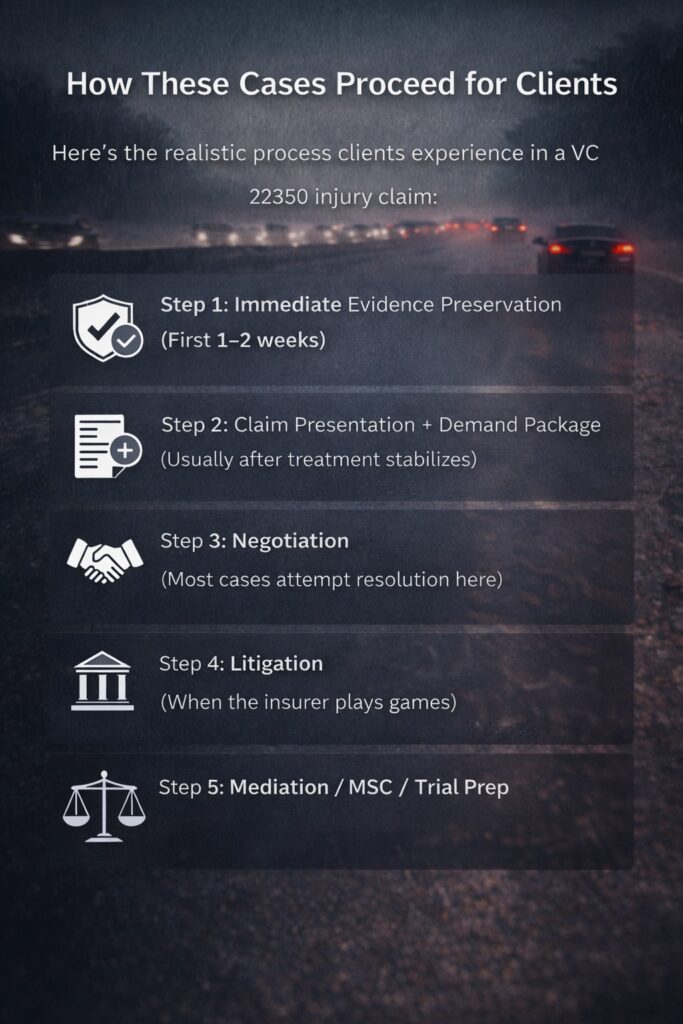
Here’s the realistic process clients experience in a VC § 21650 injury claim:
Step 1: Immediate Evidence Preservation (First 1–2 Weeks)
Video footage, vehicle data, and roadway evidence must be secured immediately.
Step 2: Claim Presentation + Demand Package
We assemble:
- Proof of wrong-way driving
- Reconstruction and speed analysis
- Medical records and life-care planning (when needed)
- Wage-loss and future-earning analysis
- A demand anchored to trial-level exposure
Step 3: Negotiation
Some cases resolve here — but insurers often recognize the seriousness early.
Step 4: Litigation (When Necessary)
If disputes arise, we pursue:
- Written discovery
- Depositions
- Expert testimony
- Motions that lock in liability
Step 5: Mediation / Trial Preparation
Wrong-way cases often settle late — but for substantial value — once trial risk is clear.
Do Wrong-Way Driving Cases Go to Trial?
Many wrong-way cases resolve before trial due to:
- Clear statutory violations
- Severe injuries or fatalities
- High jury risk
When they do go to trial, exposure is often significant.
WIN prepares every wrong-way case as if trial is inevitable.
Damages Available in VC § 21650 Cases
Injured victims and families may recover:
- Medical expenses (past and future)
- Lost income and earning capacity
- Pain and suffering
- Permanent disability
- Wrongful death damages
- Loss of companionship and support
Wrong-way crashes frequently involve seven-figure or higher claims.
Frequently Asked Questions (FAQs)
Is wrong-way driving illegal in California?
Yes. Driving on the wrong side of the roadway violates Vehicle Code § 21650 unless clearly permitted.
Are wrong-way drivers almost always at fault?
Yes. Liability is typically clear unless extraordinary circumstances exist.
Do these cases often involve DUI?
Many do, but DUI is not required to establish civil liability.
Can victims still recover if the wrong-way driver was uninsured?
Often yes, through UM/UIM coverage and other avenues.
How long do I have to file a claim?
Generally two years from the date of injury, with shorter deadlines for government claims.
Injured by a Wrong-Way Driver?
If you were injured — or lost a loved one — because a driver traveled the wrong way, your case may involve clear statutory negligence under Vehicle Code § 21650.
WIN Injury & Accident Trial Lawyers has the experience to investigate catastrophic crashes, defeat insurance defenses, and pursue full compensation — whether through settlement or trial.
Get Help From WIN Injury & Accident Trial Lawyers
Why Legal Representation Matters
Insurance companies often undervalue pain and suffering—offering minimal settlements that ignore your daily struggles. A skilled attorney can:
- Present powerful evidence of your emotional and physical suffering
- Retain expert witnesses to quantify your losses
- Use verdict data to justify higher multipliers or per diem rates
- Argue your case persuasively before a jury
At WIN Trial Lawyers, our team fights to ensure that your recovery reflects the full extent of your suffering—not just your bills.

At WIN Trial Lawyers, we know how personal injury claims can be can be. Victims often face mounting medical bills, lost wages, and emotional trauma. Our team has successfully taken on insurance companies and third parties, recovering millions for injured clients.
If you or a loved one has been injured in an accident, don’t leave your future in the hands of the insurance company. You need experienced trial lawyers who know how to prove liability and fight for maximum compensation.
If you or a loved one has been injured, don’t face this alone. The sooner you act, the stronger your case will be.
🔗 Related Posts:
Frequently Asked Questions – Vehicle Code § 21650
Wrong-Way Driving, Head-On Crashes & Liability in California
What does Vehicle Code § 21650 mean?
Vehicle Code § 21650 generally requires drivers to operate on the right half of the roadway (the correct side of travel), except where a law or traffic control device permits otherwise.
Is wrong-way driving illegal in California?
Yes. Driving the wrong way—against the intended direction of travel—typically violates Vehicle Code § 21650 and often creates strong liability in injury cases.
Are wrong-way drivers usually at fault?
Yes. In most wrong-way crashes, the wrong-way driver is overwhelmingly at fault because the conduct creates an extreme and foreseeable hazard.
Is wrong-way driving negligence per se?
Often, yes. A violation of VC § 21650 can support negligence per se if the wrong-way driving caused injury.
What is negligence per se?
Negligence per se means the law presumes a driver was negligent because they violated a safety statute designed to prevent the type of harm that occurred.
How does negligence per se help in a wrong-way crash case?
It shifts the case away from whether the driver acted reasonably and toward proving causation and damages—often strengthening settlement leverage.
What types of crashes are common in wrong-way incidents?
Wrong-way driving frequently causes head-on or offset head-on collisions, as well as secondary impacts and multi-vehicle crashes.
Why are wrong-way accidents so severe?
Because closing speeds can be extremely high, leaving minimal reaction time and resulting in catastrophic injuries or fatalities.
Do wrong-way cases often involve DUI?
Many wrong-way cases involve alcohol or drug impairment, but DUI is not required to establish civil liability.
Can fatigue or confusion be a defense?
Generally no. Even if a driver is confused or tired, they still have a duty to drive on the correct side and follow traffic control devices.
What if the wrong-way driver claims a medical emergency?
A medical emergency defense is sometimes raised, but it must typically be sudden, unforeseeable, and supported by evidence. It often fails if warning signs existed.
What if the wrong-way driver entered via an off-ramp?
Wrong-way entry via an off-ramp is common. It usually reinforces liability because signage and roadway design typically warn drivers of the correct direction.
Can a government entity be partially responsible for wrong-way crashes?
In rare cases, roadway design, signage, or maintenance may be implicated. These claims have strict deadlines and require early investigation.
What evidence is important in wrong-way driving cases?
Key evidence includes traffic camera footage, surveillance video, CHP/police reports, witness statements, event data (EDR), and collision reconstruction.
Can vehicle “black box” data help?
Yes. EDR data can help establish speed, braking, and impact timing—especially important in catastrophic collisions.
Do police reports determine fault?
No. Police reports are important, but civil liability is determined by the total evidence and legal standards.
What if both drivers were injured and blame is disputed?
Fault is usually clear in wrong-way cases, but reconstruction, lane evidence, and roadway geometry can resolve disputes.
Can passengers in the wrong-way driver’s car sue?
Yes. Passengers can bring claims against the wrong-way driver and may also have other coverage sources available.
What if the wrong-way driver was uninsured?
Victims may still recover through UM/UIM coverage and other available insurance policies or third-party liability theories.
What damages can be recovered in a wrong-way driving injury case?
Damages may include medical expenses, lost income, future earning capacity, pain and suffering, disability, and future care costs.
Can families recover damages in a wrongful death wrong-way crash?
Yes. Wrongful death damages may include loss of financial support, loss of companionship, and other legally recoverable losses.
Do wrong-way driving cases go to litigation?
They can, especially when insurers dispute damages, causation, or coverage. Liability is often strong, but the fight may shift to value.
Do wrong-way cases go to trial?
Most settle before trial, but catastrophic injury and wrongful death cases sometimes proceed further due to high exposure and disputed valuation.
How long do I have to file a wrong-way crash claim in California?
Generally two years from the date of injury, with shorter deadlines in government-related cases.
What should I do immediately after a wrong-way crash?
Seek medical care, report the crash, preserve photos/video if possible, and consult an attorney quickly to secure evidence before it disappears.
Why does early evidence preservation matter?
Video footage can be overwritten, vehicles repaired or salvaged, and roadway evidence changed quickly—especially in freeway cases.
How does WIN Injury & Accident Trial Lawyers handle wrong-way cases?
WIN investigates immediately, preserves critical evidence, retains experts when needed, and prepares every case as if it will be tried.