Liability, Evidence, and Injury Claims
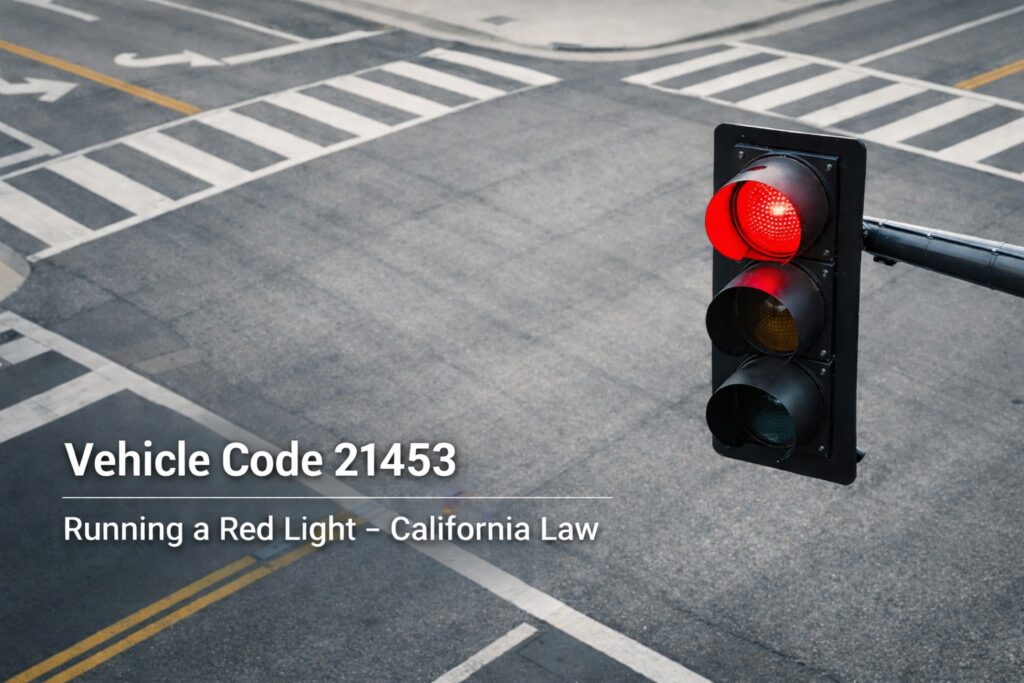
California Vehicle Code § 21453 sets out clear legal duties for drivers approaching red signals. When those duties are violated and someone is hurt, the at-fault driver can be held civilly liable for the full scope of damages.
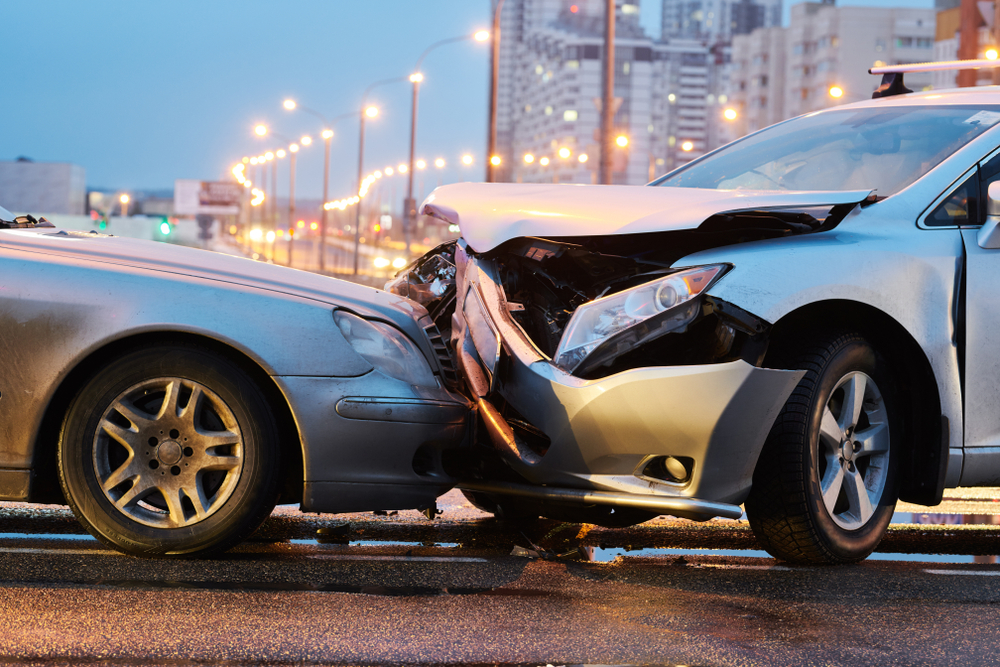
Running a red light is one of the most dangerous traffic violations in California. When a driver ignores a red traffic signal, they often cause high-speed, side-impact (“T-bone”) crashes that lead to catastrophic injuries or death.
At WIN Injury & Accident Trial Lawyers, we routinely rely on VC § 21453 to establish negligence and liability in serious intersection-collision cases throughout California.
What California Vehicle Code § 21453 Requires
Under VC § 21453, a driver facing a steady circular red signal must:
- Come to a complete stop at the limit line, crosswalk, or before entering the intersection
- Remain stopped until an indication to proceed is shown
The statute also addresses red arrows, which prohibit turns in the direction of the arrow unless a specific exception applies.
In short: red means stop — not slow down, not “beat the light.”
Why Red-Light Violations Are So Dangerous
Red-light accidents are uniquely severe because:
- They usually occur at full or near-full speed
- Victims are struck from the side, where vehicles provide the least protection
- Multiple vehicles, pedestrians, or cyclists may be involved
- Injuries are often permanent or fatal
Common injuries include:
- Traumatic brain injuries (TBI)
- Spinal cord and neck injuries
- Broken hips, ribs, and legs
- Internal organ damage
- Fatal injuries in pedestrian or motorcycle cases
Negligence Per Se and VC § 21453
In California personal injury law, running a red light under Vehicle Code § 21453 often triggers the doctrine of negligence per se.
Negligence per se applies when:
- A defendant violates a statute or regulation
- The statute was designed to prevent the type of harm that occurred
- The injured person is within the class of people the law was meant to protect
- The statutory violation caused the injury
VC § 21453 is a textbook example.
The statute exists to prevent intersection collisions and protect drivers, pedestrians, cyclists, and motorcyclists lawfully using the roadway. When a driver runs a red light and causes a crash, all four elements are typically met.
Why Negligence Per Se Matters
When negligence per se applies:
- The at-fault driver’s breach of duty is presumed
- The defense cannot argue the driver was “reasonably careful”
- The case focuses on causation and damages, not fault
This significantly strengthens injury claims involving T-bone crashes, pedestrian impacts, motorcycle collisions, and multi-vehicle intersection accidents.
Insurance Company Pushback
Insurance carriers often try to avoid negligence per se by claiming:
- The light was yellow, not red
- The signal timing was unclear
- Another driver “contributed” to the collision
That’s why these cases demand immediate evidence preservation, signal-timing analysis, and aggressive investigation. When the red-light violation is proven, those defenses usually collapse.
At WIN Injury & Accident Trial Lawyers, we routinely use negligence per se to lock in liability and force insurers to deal with the true value of our clients’ injuries.
Proving a Red-Light Violation
Successful red-light injury cases are built on strong evidence, including:
- Traffic-camera or red-light-camera footage
- Surveillance video from nearby businesses
- Vehicle event data recorders (EDRs / “black boxes”)
- Eyewitness testimony
- Police collision reports
- Accident-reconstruction analysis
Insurance companies often claim the light was “yellow” or that timing was unclear. Our firm aggressively investigates signal timing, camera data, and intersection design to defeat those defenses.
Comparative Fault Arguments (and Why They Often Fail)
California follows pure comparative negligence, meaning insurers may try to argue:
- The injured driver entered too early
- Speed contributed to the collision
- Visibility was limited
But running a red light is one of the clearest violations of traffic law. When the evidence shows a red-signal violation, comparative-fault arguments are often weak and unsuccessful.
Damages Available in Red-Light Accident Cases
Injured victims may recover compensation for:
- Medical expenses (past and future)
- Lost wages and diminished earning capacity
- Pain and suffering
- Permanent disability or disfigurement
- Property damage
- Wrongful death damages for surviving family members
In severe cases, damages can reach six or seven figures, particularly where long-term medical care is required.
Why These Cases Require a Trial-Ready Law Firm
Red-light cases often involve:
- Disputed signal timing
- High-value injuries
- Aggressive insurance defense strategies
At WIN Injury & Accident Trial Lawyers, we prepare every red-light case as if it will go to trial. That leverage forces insurance carriers to take claims seriously — and pay full value.
Get Help From WIN Injury & Accident Trial Lawyers
Why Legal Representation Matters
Insurance companies often undervalue pain and suffering—offering minimal settlements that ignore your daily struggles. A skilled attorney can:
- Present powerful evidence of your emotional and physical suffering
- Retain expert witnesses to quantify your losses
- Use verdict data to justify higher multipliers or per diem rates
- Argue your case persuasively before a jury
At WIN Trial Lawyers, our team fights to ensure that your recovery reflects the full extent of your suffering—not just your bills.

At WIN Trial Lawyers, we know how personal injury claims can be can be. Victims often face mounting medical bills, lost wages, and emotional trauma. Our team has successfully taken on insurance companies and third parties, recovering millions for injured clients.
If you or a loved one has been injured in an accident, don’t leave your future in the hands of the insurance company. You need experienced trial lawyers who know how to prove liability and fight for maximum compensation.
If you or a loved one has been injured, don’t face this alone. The sooner you act, the stronger your case will be.
🔗 Related Posts:
Frequently Asked Questions (FAQs)
Frequently Asked Questions – Vehicle Code 21453 (Running a Red Light)
What does Vehicle Code 21453 mean in California?
Vehicle Code 21453 requires drivers to come to a complete stop at a steady red traffic signal and remain stopped until a green signal or other lawful indication to proceed appears.
Is running a red light illegal even if no accident occurs?
Yes. Running a red light is a traffic violation regardless of whether a crash occurs. However, when an accident does occur, the violation becomes powerful evidence of civil liability.
Does running a red light automatically make a driver at fault?
In most cases, yes. A violation of Vehicle Code 21453 often establishes negligence per se, meaning the driver is presumed negligent if the violation caused the injury.
What is negligence per se in a red-light accident?
Negligence per se applies when a driver violates a safety law (like Vehicle Code 21453), the law was designed to prevent the type of harm that occurred, and the violation caused injury to someone the law was meant to protect.
Can negligence per se be challenged by the insurance company?
Insurance companies may attempt to challenge negligence per se by arguing the light was yellow, the signal was malfunctioning, or another driver caused the collision. Strong evidence is critical to defeating these defenses.
What if the other driver claims the light was yellow?
Yellow-light defenses are common. Video footage, witness testimony, signal timing data, and accident reconstruction are often used to prove the light was red at the time of impact.
Can red-light camera footage be used in an injury case?
Yes. Red-light camera footage can be powerful evidence in both traffic and civil injury cases, especially when it clearly shows the violation and timing.
Are pedestrians protected under Vehicle Code 21453?
Yes. Vehicle Code 21453 is designed to protect pedestrians, cyclists, motorcyclists, and drivers who are lawfully in the intersection.
What if a pedestrian was hit by a driver running a red light?
Pedestrians struck by drivers running red lights often have very strong injury claims due to the clear statutory violation and the severe nature of pedestrian injuries.
Does Vehicle Code 21453 apply to cyclists?
Yes. Cyclists are considered lawful roadway users, and drivers owe them the same duty of care at traffic signals.
What if the red light involved a red arrow?
Red arrows prohibit turns in the direction of the arrow unless a posted sign allows the movement. Violating a red arrow can still establish negligence.
Can a driver turn right on red in California?
Yes, but only after coming to a complete stop and yielding to pedestrians and oncoming traffic—unless a posted sign prohibits the turn.
Is failing to stop before turning right on red a violation?
Yes. Rolling through a right turn on red without a full stop violates Vehicle Code 21453 and can result in liability if an injury occurs.
What types of accidents are commonly caused by red-light violations?
Common accidents include T-bone collisions, pedestrian impacts, motorcycle crashes, and multi-vehicle intersection pileups.
Why are red-light accidents often severe?
These crashes often involve high speeds and side impacts, which provide less vehicle protection and frequently cause serious or fatal injuries.
What injuries are common in red-light accidents?
Common injuries include traumatic brain injuries, spinal injuries, broken bones, internal organ damage, and fatal injuries in severe cases.
Can multiple drivers be at fault in a red-light accident?
Yes. California follows pure comparative negligence, but a red-light violation often places the majority—or all—of the fault on the violator.
What if I was partially speeding but the other driver ran a red light?
Speed may be considered, but running a red light is a significant violation that often outweighs minor contributory conduct.
How does comparative negligence affect red-light cases?
Even if the injured party shares some fault, they may still recover damages reduced by their percentage of responsibility.
What damages can I recover in a red-light injury case?
Damages may include medical expenses, lost wages, future earning capacity, pain and suffering, disability, property damage, and wrongful death damages.
Can red-light accident cases result in large settlements?
Yes. Severe red-light accident cases often result in six- or seven-figure settlements or verdicts due to clear liability and serious injuries.
How long do I have to file a claim after a red-light accident?
Generally, you have two years from the date of injury, though shorter deadlines may apply if a government entity is involved.
What evidence is most important in red-light accident cases?
Key evidence includes traffic-camera footage, surveillance video, police reports, eyewitness statements, vehicle data, and expert reconstruction.
Should I speak to the insurance company after a red-light accident?
You should be cautious. Insurance adjusters often seek statements that minimize liability. Consulting a lawyer first is strongly recommended.
Do police reports decide fault in red-light cases?
Police reports are important but not determinative. Liability is ultimately decided based on evidence, not just the officer’s conclusions.
Can intersection design or signal malfunction affect liability?
Yes. In rare cases, defective signal timing or poor intersection design may implicate a government entity, subject to strict notice requirements.
Why should I hire a trial-ready law firm for a red-light case?
Insurance companies take cases more seriously when the firm has a proven trial reputation. Trial readiness often leads to higher settlements.
How can WIN Injury & Accident Trial Lawyers help?
WIN investigates red-light violations aggressively, preserves evidence early, and builds cases designed to win—whether through settlement or trial.