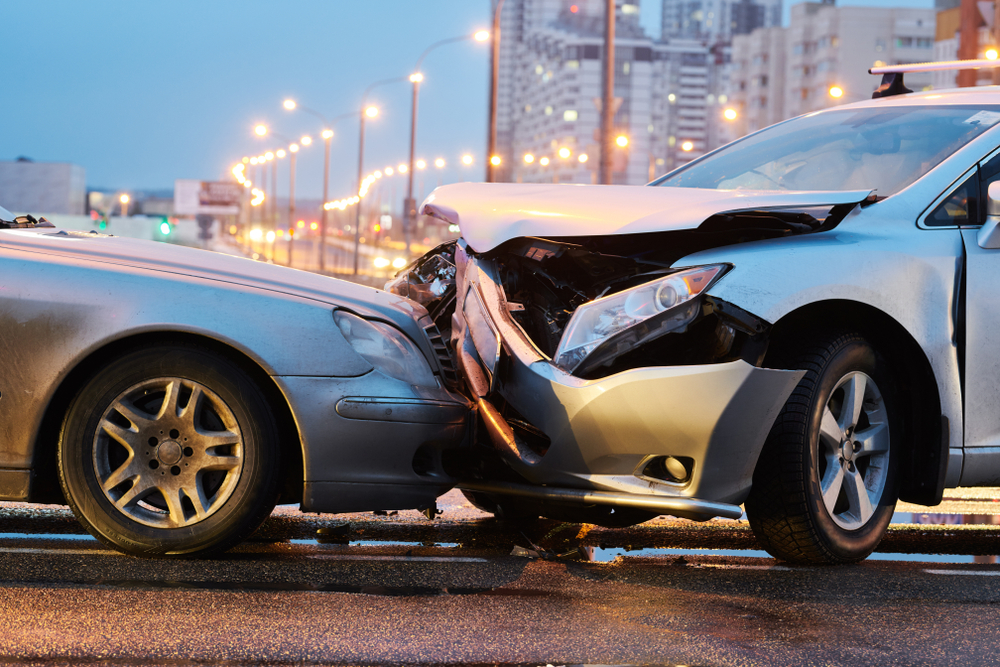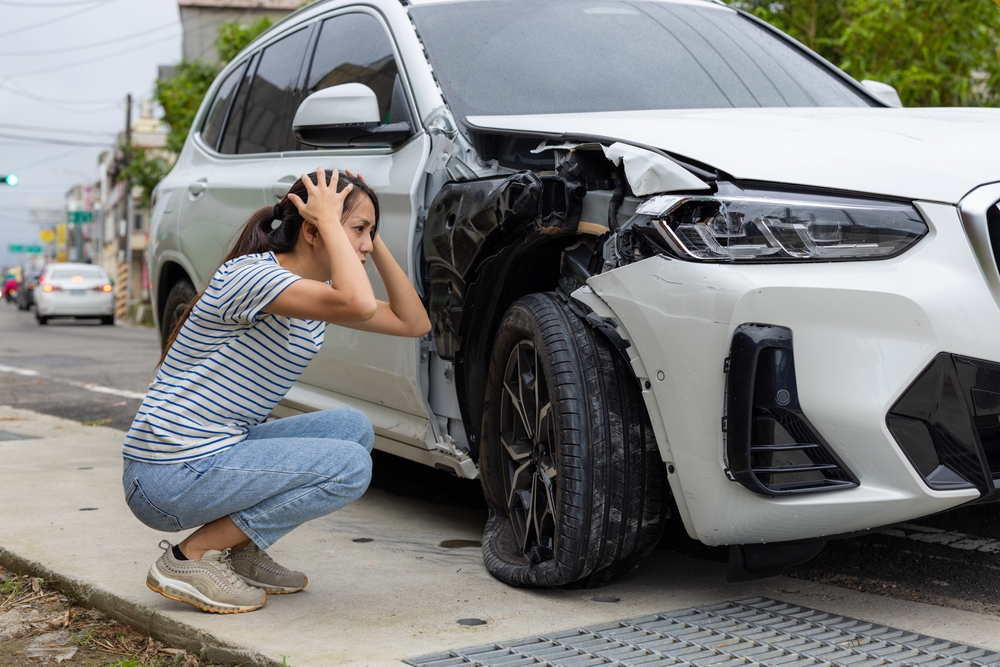
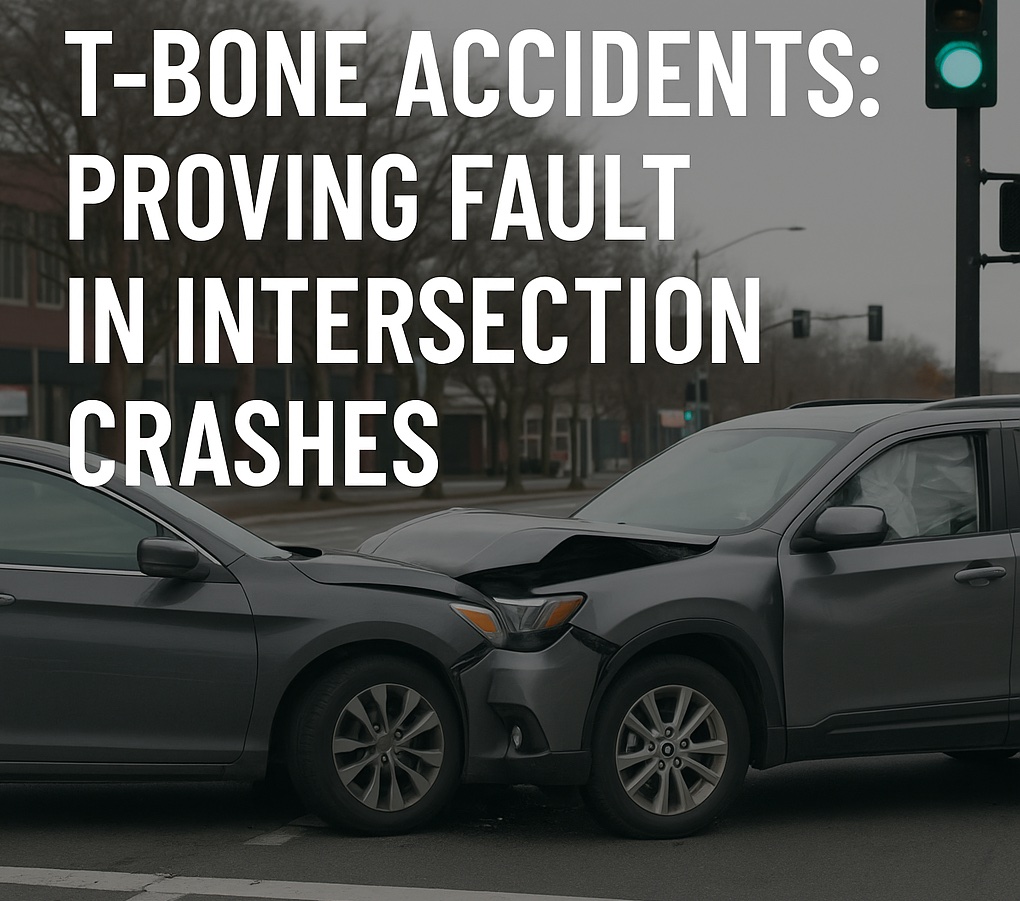
T-bone accidents—also known as side-impact collisions—are among the most dangerous types of crashes on California roads. They often happen at intersections, where one driver runs a red light or fails to yield, striking the side of another vehicle.
At WIN Trial Lawyers, we’ve seen how devastating these accidents can be—both physically and financially. Understanding how fault is determined is key to winning your case and securing full compensation.
What Is a T-Bone Accident?
A T-bone accident — also known as a side-impact or broadside collision — occurs when the front of one vehicle slams directly into the side of another, forming the shape of a “T.” These crashes are especially dangerous because a vehicle’s doors and side panels offer far less structural protection than the front or rear. There is minimal space between the point of impact and the driver or passenger, making the injuries much more severe.
T-bone accidents often happen at intersections or anywhere two lanes of traffic cross. They are commonly caused by:
- A driver running a red light or stop sign
- Failing to yield during a left turn
- Speeding through a stale yellow light
- Distracted driving, such as texting or looking away
- Impaired or fatigued driving
- Misjudging the oncoming vehicle’s speed or distance
Even at moderate speeds — 25 to 35 mph — the force of a side-impact crash can crush the door inward, deploy side airbags, and violently jolt occupants toward the point of impact. These collisions frequently result in catastrophic injuries, particularly for the passenger seated on the struck side of the vehicle.
Common Injuries in T-Bone Collisions
Because the human body absorbs so much of the force in a side collision, T-bone crashes often lead to serious, life-altering injuries. Some of the most common include:
• Head and Brain Injuries
Occupants may strike their head against the window, door frame, airbag, or another passenger. This can result in concussions, skull fractures, or traumatic brain injuries (TBIs) that cause long-term cognitive and neurological problems.
• Neck and Back Trauma
The sideways whipping motion can herniate discs, strain ligaments, or even damage the spinal cord. Many victims experience chronic neck pain, sciatica, or limited mobility long after the crash.
• Rib, Pelvic, and Arm Fractures
The inward collapse of the door can crush the torso or pin the occupant, causing broken ribs, arm fractures, clavicle injuries, and severe bruising.
• Internal Bleeding and Organ Damage
Side impacts can injure the lungs, spleen, liver, or kidneys—injuries that are not always obvious at the scene but can become life-threatening without immediate treatment.
• Soft-Tissue and Whiplash Injuries
The sudden jolt can damage muscles, ligaments, and tendons in the neck, shoulders, and back. These injuries often lead to headaches, stiffness, and long-term pain.
Passengers on the impact side of the vehicle face the highest risk because there is less padding and structural reinforcement to absorb the crash energy.
Determining Fault in an Intersection Crash
Establishing fault in a T-bone accident can be far more complex than it first appears. Many people assume that the driver who struck the other vehicle is automatically at fault, but this is not always true. The striking driver may have had the right of way, while the other driver may have failed to yield, run a light, or turned improperly.
Insurance companies often aggressively dispute liability in intersection crashes because payouts tend to be much higher due to the severity of injuries. A skilled attorney must gather and analyze a wide range of evidence, such as:
• Traffic Camera or Dashcam Footage
Video evidence is often the most reliable way to prove who entered the intersection improperly.
• Police Reports and Witness Statements
Officers may note right-of-way violations, intoxication, speeding, or other contributing factors.
• Physical Evidence at the Scene
Skid marks, debris scatter patterns, and the point of impact help reconstruct how the collision occurred.
• Vehicle Black Box Data
Modern vehicles record speed, braking, acceleration, and steering data in the moments before impact.
• Intersection Light Sequencing and Timing Data
For accidents involving traffic signals, timing records can show whether a driver entered on a red or green light.
Comparative Negligence in California
California follows a pure comparative negligence system. This means each driver’s compensation is reduced by their percentage of fault. For example:
- If you were 20% at fault, you can still recover 80% of your damages.
- Even if you were 60% at fault, you can still recover 40%.
- There is no threshold that completely bars recovery.
This system makes fault determination critical. Strong evidence can significantly increase the value of your claim, even if the other side tries to shift blame.
Who Can Be Held Liable?
Depending on the facts, multiple parties might share responsibility for a T-bone accident, including:
- The negligent driver who violated traffic laws
- A third driver who caused another vehicle to swerve or collide
- Municipal entities, if faulty traffic signals or poor intersection design contributed
- Vehicle manufacturers, if brake or steering defects played a role
An experienced legal team can identify every liable party to maximize your recovery.
Compensation Available in T-Bone Accident Claims
Victims of side-impact collisions may be entitled to compensation for:
- Medical bills (emergency care, surgery, rehabilitation)
- Lost income and reduced earning potential
- Pain and suffering
- Emotional distress
- Vehicle repair or replacement
- Punitive damages (in cases of reckless or drunk driving)
At WIN Trial Lawyers, we work with top medical experts and accident reconstructionists to present the strongest possible case.
Steps to Take After a T-Bone Accident
- Call 911 immediately and get medical attention.
- Exchange information with all drivers and witnesses.
- Take photos of the vehicles, intersection, and traffic signals.
- Request the police report number.
- Contact a lawyer before speaking to insurance adjusters.
The sooner you get legal help, the better your chances of protecting your rights and preserving key evidence.
How WIN Trial Lawyers Can Help
Our firm has extensive experience handling intersection and side-impact collisions throughout California. We know how to prove fault even when liability is disputed, and we don’t back down when insurance companies try to shift blame.
We handle your case from start to finish—investigating the crash, working with experts, and fighting for maximum compensation in settlement or trial.
Contact WIN Trial Lawyers
If you were injured in a T-bone collision, don’t face the insurance company alone.
Call WIN Trial Lawyers today for a free consultation and let our trial-tested team fight for you.
At WIN Trial Lawyers, we know how devastating distracted driving accidents can be. Victims often face mounting medical bills, lost wages, and emotional trauma. Our team has successfully taken on insurance companies and distracted drivers, recovering millions for injured clients.
If you or a loved one has been injured in a speeding-related car accident, don’t leave your future in the hands of the insurance company. You need experienced trial lawyers who know how to prove liability and fight for maximum compensation.
If you or a loved one has been injured in a distracted driving accident, don’t face this alone. The sooner you act, the stronger your case will be.