What We Know — and the Legal Questions That Follow
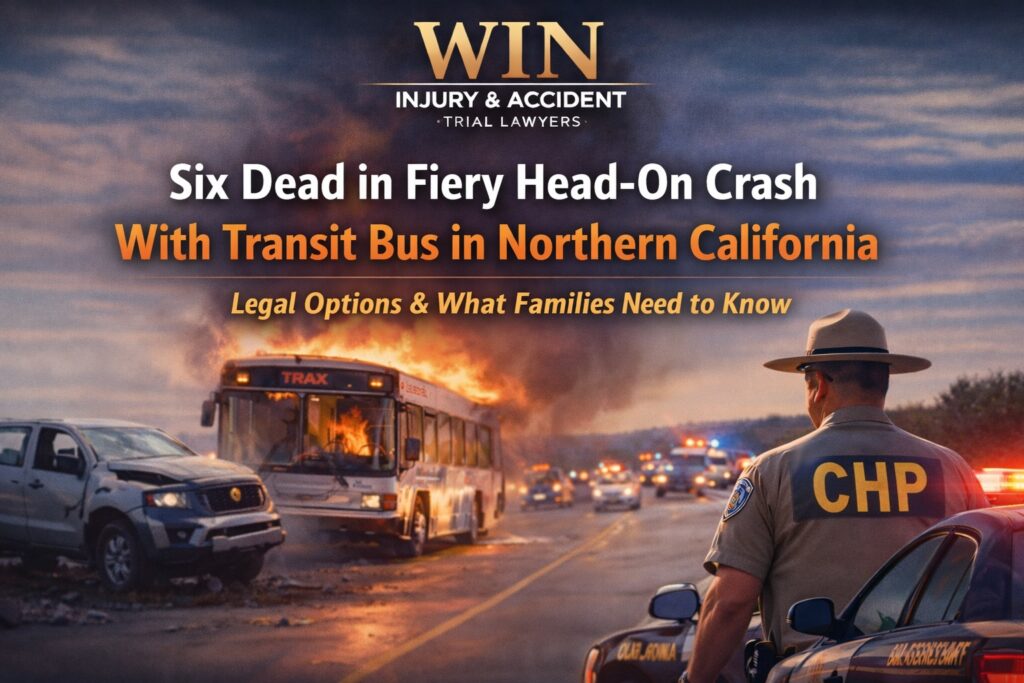
A devastating head-on collision involving a transit bus and a pickup truck in Northern California has left six people dead and another critically injured, sending shockwaves through the community and underscoring how catastrophic roadway crashes can become in seconds.
At WIN Injury & Accident Trial Lawyers, we closely follow serious and fatal collisions like this one—not only to report what happened, but to help families understand their rights, options, and next steps during unimaginably difficult moments.
What HWhat Happened on Highway 99W
A deadly head-on collision occurred on Highway 99W near Gyle Road in Tehama County, involving a pickup truck and a public transit bus operated by Tehama Rural Area Express (TRAX).
According to the California Highway Patrol (CHP), the pickup truck crossed into oncoming traffic and collided head-on with the northbound bus. The impact caused the bus to catch fire, prompting an immediate emergency response.
Multiple agencies, including CAL FIRE, local fire departments, and emergency medical services responded to the scene. Fire crews worked to extinguish the blaze while first responders provided medical aid and secured the area.
Highway 99W was closed for several hours as authorities conducted evidence collection, scene documentation, and recovery operations before reopening the roadway.
Lives Lost and Critical Injuries
Authorities have confirmed six fatalities resulting from the crash.
Those killed include:
- The driver of the pickup truck
- The bus driver
- Four passengers on the bus
In addition, one bus passenger sustained critical injuries and was airlifted to Enloe Medical Center for emergency treatment.
The identities of the deceased have not yet been released, pending notification of next of kin, according to officials.
The Ongoing Investigation
The CHP is continuing its investigation into the cause of the collision. As of now, authorities have not determined why the pickup truck crossed the centerline.
Investigators are examining:
- Driver behavior and condition
- Vehicle condition
- Roadway design and lane markings
- Speed, visibility, and environmental factors
Officials have stated that it is too early to determine whether alcohol, drugs, distraction, or a medical issue contributed to the crash.
In fatal crashes involving public transit vehicles, investigations can take several weeks or longer, as collision reconstruction and forensic analysis are completed.
Authorities are asking anyone with information related to the crash to contact the CHP Red Bluff Area Office.
Why Head-On Collisions Are Often Fatal
Head-on collisions are among the most dangerous and lethal types of motor vehicle accidents, particularly on two-lane highways like Highway 99W where opposing traffic is separated only by painted lane markings.
Several factors contribute to the extreme severity of these crashes:
- Combined Speed Forces
When two vehicles collide head-on, their speeds are effectively added together, dramatically increasing the force of impact. Even moderate speeds can result in catastrophic injuries or fatalities. - Limited Reaction Time
Drivers often have only seconds—or less—to react when a vehicle crosses into their lane, leaving little opportunity to brake or take evasive action. - Severe Passenger Compartment Intrusion
Head-on impacts frequently cause the front ends of vehicles to collapse inward, leading to devastating injuries to occupants’ heads, chests, and lower extremities. - Increased Risk of Fire
Damage to fuel systems, engines, or electrical components can lead to post-collision fires, as seen in this crash, further increasing the risk of fatal outcomes.
When a bus or commercial vehicle is involved, the danger is amplified. The size and weight disparity between vehicles can cause smaller vehicles to absorb most of the impact force, while passengers on buses may face unique risks related to seating configuration, restraint systems, and fire exposure.
Legal Questions Raised by Fatal Bus Crashes
Crashes involving public transit buses often raise complex legal issues, as they may involve multiple parties, public agencies, and overlapping responsibilities. While the investigation is ongoing, several types of legal claims may arise depending on the findings.
1. Wrongful Death Claims
Families of those killed may be entitled to pursue wrongful death claims to seek compensation for losses resulting from the fatal crash, which may include:
- Funeral and burial expenses
- Loss of financial support and household contributions
- Loss of companionship, care, love, and guidance
These claims are typically brought by surviving spouses, children, or other eligible family members under California law.
2. Survivor Injury Claims
Passengers who survive a serious bus crash may be entitled to pursue personal injury claims for damages such as:
- Emergency medical care and hospitalization
- Ongoing medical treatment and rehabilitation
- Long-term or permanent disability
- Pain, suffering, and reduced quality of life
In severe cases, survivors may require months or years of treatment, adaptive care, or lifelong support.
3. Government or Agency Liability
When a public transit bus is involved, government entities or public agencies may bear legal responsibility if the investigation reveals contributing factors such as:
- Dangerous roadway design or inadequate lane separation
- Failure to implement or maintain safety measures
- Poor vehicle maintenance or safety inspections
- Negligent hiring, training, or supervision of drivers
⚠️ Important: Claims against government entities are subject to strict procedural requirements, including short notice deadlines—often as little as six months from the date of the incident. Missing these deadlines can permanently bar a claim.
What Families Should Do After a Fatal Crash
Families dealing with the aftermath of a fatal or catastrophic accident often face overwhelming grief, confusion, and unanswered questions. Taking the right steps early can help protect legal rights while investigations are still underway.
Key considerations include:
- Do not rely solely on insurance companies or public statements
Initial reports may be incomplete or change as evidence is reviewed. - Preserve all available evidence
This includes photos, videos, medical records, witness contact information, and any correspondence related to the incident. - Avoid giving recorded statements without legal guidance
Statements made early can later be used to limit or deny claims. - Consult an experienced wrongful death attorney as early as possible
Early legal involvement allows for independent investigation, evidence preservation, and compliance with critical deadlines—especially in cases involving public agencies.
Early investigation can make a critical difference in uncovering what happened, identifying responsible parties, and ensuring families have access to the full range of legal options available to them.mercial vehicle is involved, the imbalance in size and weight can make injuries even more catastrophic.
Legal Questions Raised by Fatal Bus Crashes
When a collision involves a public transit bus, multiple layers of legal responsibility may apply. Depending on the investigation’s findings, potential claims may include:
1. Wrongful Death Claims
Families of those killed may be entitled to compensation for:
- Funeral and burial costs
- Loss of financial support
- Loss of companionship, care, and guidance
2. Survivor Injury Claims
Passengers who survive may pursue claims for:
- Medical expenses
- Long-term rehabilitation
- Pain, suffering, and disability
3. Government or Agency Liability
Public entities may be legally responsible if factors such as:
- Roadway design defects
- Inadequate safety measures
- Improper vehicle maintenance
- Negligent hiring or training
contributed to the crash.
⚠️ Important: Claims against government entities are subject to strict deadlines and notice requirements, often as short as six months.
What Families Should Do After a Fatal Crash
If your family has been affected by a serious or fatal accident:
- Do not rely solely on insurance companies or public statements
- Preserve evidence (photos, medical records, witness information)
- Avoid recorded statements without legal guidance
- Consult an experienced wrongful death attorney early
Early investigation can make a critical difference—especially when public agencies or commercial vehicles are involved.
Our Commitment at WIN Injury & Accident Trial Lawyers
At WIN Injury & Accident Trial Lawyers, we represent families facing the aftermath of fatal crashes, bus accidents, and catastrophic injuries throughout California.
We understand that no legal outcome can undo a loss—but accountability, answers, and financial stability matter.
If you or someone you love has been affected by a serious crash, our team is here to help you understand your rights with clarity and compassion.
Get Help From WIN Injury & Accident Trial Lawyers
Why Legal Representation Matters
Insurance companies often undervalue pain and suffering—offering minimal settlements that ignore your daily struggles. A skilled attorney can:
- Present powerful evidence of your emotional and physical suffering
- Retain expert witnesses to quantify your losses
- Use verdict data to justify higher multipliers or per diem rates
- Argue your case persuasively before a jury
At WIN Trial Lawyers, our team fights to ensure that your recovery reflects the full extent of your suffering—not just your bills.
At WIN Trial Lawyers, we know how personal injury claims can be can be. Victims often face mounting medical bills, lost wages, and emotional trauma. Our team has successfully taken on insurance companies and third parties, recovering millions for injured clients.
If you or a loved one has been injured in an accident, don’t leave your future in the hands of the insurance company. You need experienced trial lawyers who know how to prove liability and fight for maximum compensation.
If you or a loved one has been injured, don’t face this alone. The sooner you act, the stronger your case will be.
🔗 Related Posts:
Frequently Asked Questions (FAQs)
Who can file a wrongful death claim in California?
In California, a wrongful death claim may typically be filed by the deceased person’s surviving spouse or domestic partner, children, or, in some cases, other dependents or heirs. Eligibility depends on family relationships and financial dependency.
Can families sue after a fatal bus accident?
Yes. Families may be able to pursue legal claims following a fatal bus accident, depending on the circumstances and findings of the investigation. Claims may involve individual drivers, transportation agencies, or other responsible parties.
Are public transit agencies protected from lawsuits?
Public transit agencies are not immune from lawsuits, but claims against government entities are subject to special rules and shortened deadlines. In many cases, a formal government claim must be filed within six months of the incident.
What compensation may be available after a fatal crash?
Depending on the claim, compensation may include funeral and burial costs, lost financial support, loss of companionship, and other damages allowed under California law. The availability and amount of compensation depend on the facts of the case.
What if the investigation is still ongoing?
Families do not need to wait for an investigation to conclude before seeking legal guidance. In fact, early action is often critical to preserve evidence and comply with strict notice deadlines—especially in cases involving public agencies.
Should families speak with insurance companies after a fatal crash?
Families should proceed with caution. Insurance representatives may request statements early, but anything said can later be used to limit or deny claims. Many families choose to seek legal guidance before engaging in recorded conversations.
How long do families have to take legal action?
Time limits vary depending on the type of claim and whether a government entity is involved. Some claims must be initiated within months, not years. Missing a deadline can permanently bar recovery.