
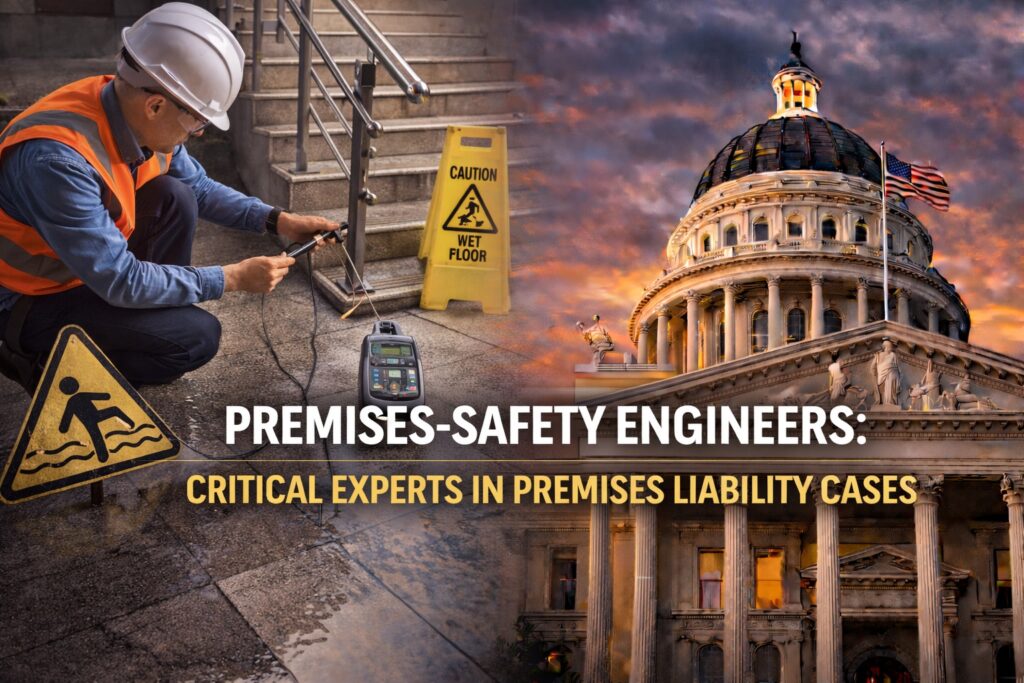
Proving a premises liability case often requires more than photographs and witness testimony. In serious injury cases, premises-safety engineers play a critical role in identifying why a property was unsafe—and how it violated accepted safety standards.
At WIN Injury & Accident Trial Lawyers, we routinely work with premises-safety engineers to establish liability in slip-and-fall, trip-and-fall, stairway, and accessibility cases.
What Is a Premises-Safety Engineer?
A premises-safety engineer is a forensic expert trained to evaluate whether a property was designed, maintained, and operated in a reasonably safe manner.
These experts analyze hazards involving:
- Flooring and walking surfaces
- Stairs and stair geometry
- Handrails and guardrails
- Slip resistance and traction
- Elevation changes and transitions
- Lighting and visibility (in coordination with other experts)
Their opinions are often central to proving breach of duty and causation.
Why Premises-Safety Engineers Matter in Liability Cases
Property owners and insurers often argue that a condition was “minor,” “obvious,” or “not dangerous.” Premises-safety engineers counter these defenses with objective, technical analysis grounded in safety science and building standards.
Their testimony helps establish:
- The condition was unsafe
- The danger was foreseeable
- The risk exceeded acceptable safety thresholds
- The injury was preventable
Key Areas of Premises-Safety Engineering Analysis
1. Flooring and Slip Resistance
Slip resistance is a leading issue in fall cases. Engineers evaluate:
- Coefficient of friction (COF)
- Floor materials and finishes
- Presence of contaminants (water, grease, debris)
- Maintenance and cleaning practices
Unsafe slip resistance frequently violates industry standards and safety guidelines.
2. Stairs and Stairway Design
Stairs are one of the most common locations for serious falls. Engineers analyze:
- Tread depth and riser height consistency
- Uniformity of steps
- Stairway geometry
- Visual cues and contrast
- Code compliance
Even small deviations can significantly increase fall risk.
3. Handrails and Guardrails
Premises-safety engineers examine whether handrails:
- Were present where required
- Were properly mounted and continuous
- Met height and grip requirements
- Were secure and functional
Missing or non-compliant handrails are a frequent basis for liability.
4. Walking Surface Transitions
Changes in elevation—such as curbs, ramps, thresholds, or flooring transitions—are common trip hazards. Engineers evaluate whether these transitions were:
- Properly designed
- Adequately marked
- Code-compliant
- Reasonably visible
5. Compliance With Safety Standards and Codes
Premises-safety engineers often assess compliance with:
- Building and safety codes
- Accessibility standards
- Industry safety guidelines
- Accepted engineering practices
Code violations can strongly support negligence per se theories.
How These Experts Strengthen Premises Liability Claims
Premises-safety engineers help establish:
- Duty – what safety measures were required
- Breach – how the property failed to meet those standards
- Causation – how the unsafe condition caused the injury
- Rebuttal of defenses – why “open and obvious” arguments fail
Their testimony is often persuasive to judges, juries, and mediators.
Cases That Commonly Require Premises-Safety Engineers
These experts are frequently used in cases involving:
- Slip-and-fall accidents
- Trip-and-fall injuries
- Stairway falls
- Parking-lot and walkway injuries
- Retail and restaurant accidents
- Apartment and HOA common-area injuries
- Public-entity sidewalk and stair cases
How WIN Uses Premises-Safety Engineers
At WIN Injury & Accident Trial Lawyers, we work closely with premises-safety engineers to:
- Conduct on-site inspections
- Perform slip-resistance testing
- Measure stairs, handrails, and elevations
- Analyze code compliance
- Prepare trial-ready opinions
We integrate expert findings into a clear liability narrative that juries understand.
Frequently Asked Questions
Are premises-safety engineers required in every case?
Not every case—but they are often critical in serious injury or contested liability cases.
Do these experts rely on building codes only?
No. They also rely on safety science, industry standards, and human-factors principles.
Can they defeat “open and obvious” defenses?
Yes. Engineers often show that a condition was objectively dangerous even if visible.
Are they used against public entities?
Frequently, especially in sidewalk, stair, and public-facility cases.
Injured Due to an Unsafe Property Condition? WIN Can Help.
If you were injured because a property had unsafe flooring, stairs, handrails, or walking surfaces, premises-safety engineering analysis may be critical to your case.
WIN Injury & Accident Trial Lawyers works with leading experts to prove premises liability claims throughout California.
📞 Contact us today for a confidential consultation.
Get Help From WIN Injury & Accident Trial Lawyers
Why Legal Representation Matters
Insurance companies often undervalue pain and suffering—offering minimal settlements that ignore your daily struggles. A skilled attorney can:
- Present powerful evidence of your emotional and physical suffering
- Retain expert witnesses to quantify your losses
- Use verdict data to justify higher multipliers or per diem rates
- Argue your case persuasively before a jury
At WIN Trial Lawyers, our team fights to ensure that your recovery reflects the full extent of your suffering—not just your bills.
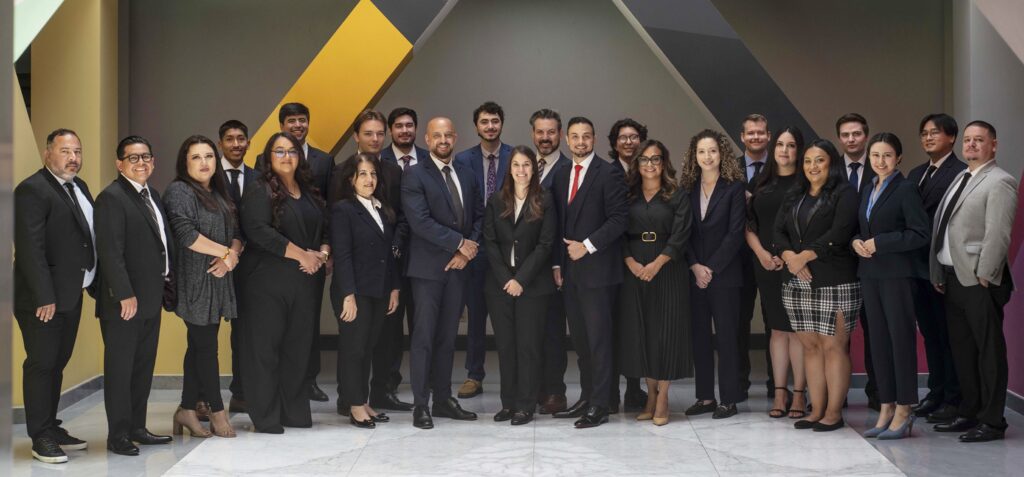
At WIN Trial Lawyers, we know how personal injury claims can be can be. Victims often face mounting medical bills, lost wages, and emotional trauma. Our team has successfully taken on insurance companies and third parties, recovering millions for injured clients.
If you or a loved one has been injured in an accident, don’t leave your future in the hands of the insurance company. You need experienced trial lawyers who know how to prove liability and fight for maximum compensation.
If you or a loved one has been injured, don’t face this alone. The sooner you act, the stronger your case will be.