

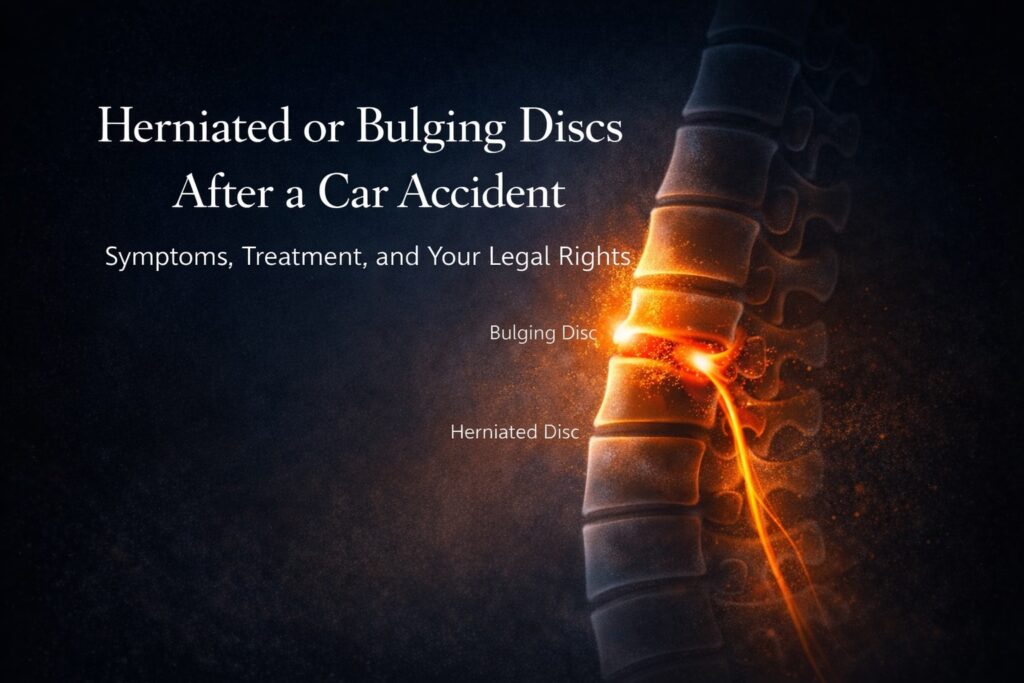
Car accidents can cause far more than surface-level injuries. One of the most common—and most misunderstood—injuries following a crash is a herniated or bulging disc. These spinal injuries can lead to chronic pain, nerve damage, mobility issues, and long-term disability if not properly diagnosed and treated.
Many accident victims are told their pain is “just soreness” or that it will resolve on its own. But disc injuries often worsen over time, especially when left untreated.
At WIN Injury & Accident Trial Lawyers, we represent car accident victims with serious spinal injuries and fight to recover full compensation for both immediate and long-term consequences.
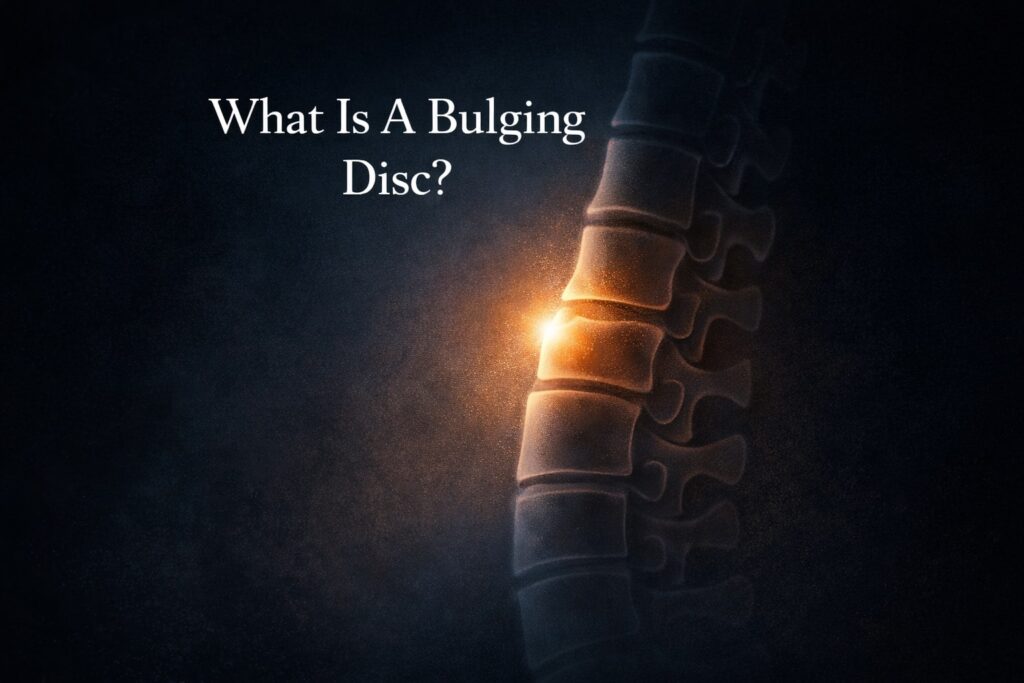
What Is a Bulging Disc?
A bulging disc occurs when the spinal disc extends beyond its normal space between the vertebrae, but the outer layer of the disc remains intact. This outward protrusion can place pressure on nearby nerves or the spinal cord, leading to pain, stiffness, and neurological symptoms.
Bulging discs often develop when the spine is subjected to sudden force, compression, or twisting, all of which are common in car accidents. Rear-end collisions frequently cause rapid forward-and-back movement of the spine, while side-impact crashes can compress the spine laterally, increasing the risk of disc bulging.
Although bulging discs are sometimes described as less severe than herniated discs, they can still cause significant discomfort and functional limitations, particularly when they press against nerve roots. Symptoms may worsen over time if inflammation increases or if the disc continues to protrude following the accident.
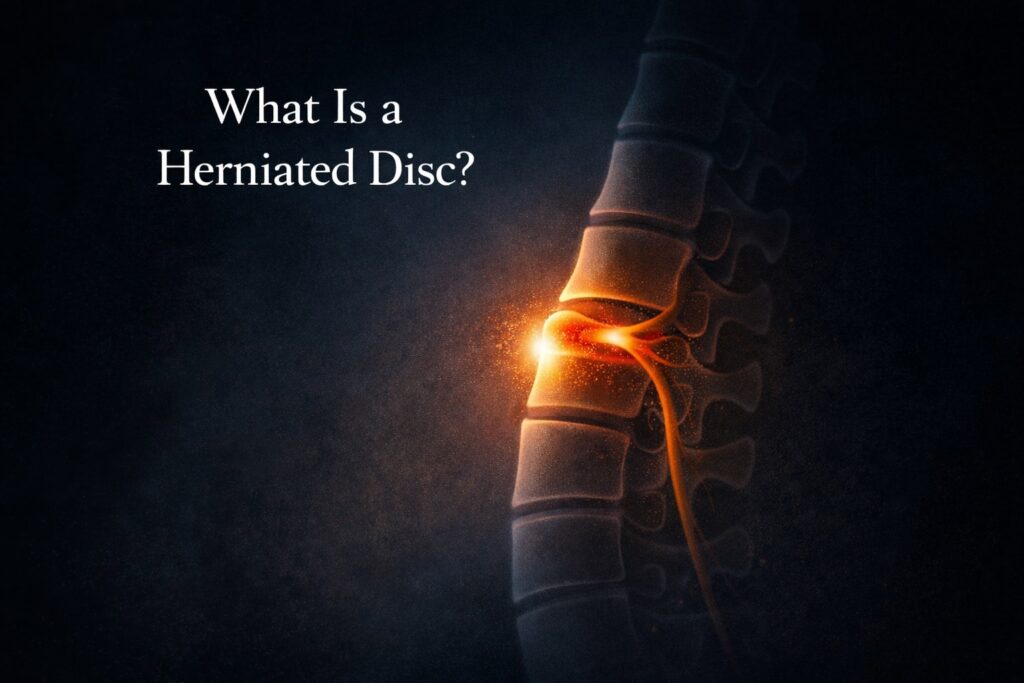
What Is a Herniated Disc?
A herniated disc—sometimes referred to as a “slipped” or “ruptured” disc—is a more serious spinal injury. It occurs when the outer layer of the disc tears or ruptures, allowing the inner gel-like material to push outward and press directly on spinal nerves.
Because herniated discs involve direct nerve compression, they often cause more severe and persistent symptoms than bulging discs. These symptoms may include sharp or burning pain, numbness, tingling, muscle weakness, and pain that radiates into the arms or legs depending on the location of the injury.
Herniated discs frequently require more aggressive treatment, including injections or surgery, particularly when nerve damage or loss of function is present. Without proper medical care, herniated discs can lead to chronic pain, long-term disability, and permanent nerve impairment.
Bulging Disc vs. Herniated Disc: What’s the Difference?
| Feature | Bulging Disc | Herniated Disc |
|---|---|---|
| Definition | Disc extends beyond its normal space, but the outer layer remains intact | Outer layer of the disc tears, allowing inner material to push out |
| Severity | Often mild to moderate, but can worsen over time | Typically more severe and more likely to cause nerve damage |
| Common Cause in Car Accidents | Sudden compression or whiplash forces | High-force impact, twisting, or severe spinal stress |
| Effect on Nerves | May place pressure on nearby nerves | Direct compression of spinal nerves is common |
| Typical Symptoms | Localized pain, stiffness, limited mobility | Radiating pain, numbness, tingling, weakness |
| Onset of Symptoms | Immediate or delayed | Immediate or delayed, often worsening |
| Diagnostic Imaging | Often identified on MRI | Clearly visible on MRI or CT scan |
| Treatment Approach | Physical therapy, medication, conservative care | Injections, advanced pain management, or surgery |
| Surgical Likelihood | Less common | More likely in moderate to severe cases |
| Long-Term Impact | May resolve or become chronic | Higher risk of permanent nerve damage |
| Legal Significance | Still compensable if symptomatic | Often supports higher-value injury claims |
How Car Accidents Cause Disc Injuries
The violent forces involved in a car accident can damage spinal discs in several ways, including:
- Sudden whiplash motion of the neck and spine
- Compression of the spine during impact
- Twisting forces during rollovers or side collisions
- Direct trauma to the back or neck
- Pre-existing disc weakness aggravated by the crash
Even low-speed accidents can cause disc injuries, particularly when the body is unprepared for the impact.
Common Symptoms of Bulging or Herniated Discs
Symptoms may appear immediately or develop days or weeks after the accident. Common signs include:
- Neck or back pain
- Radiating pain into the arms or legs
- Numbness or tingling in the extremities
- Muscle weakness
- Limited range of motion
- Pain that worsens with movement, sitting, or standing
⚠️ Important: Disc injuries often worsen over time. Delaying treatment can increase the risk of permanent nerve damage.
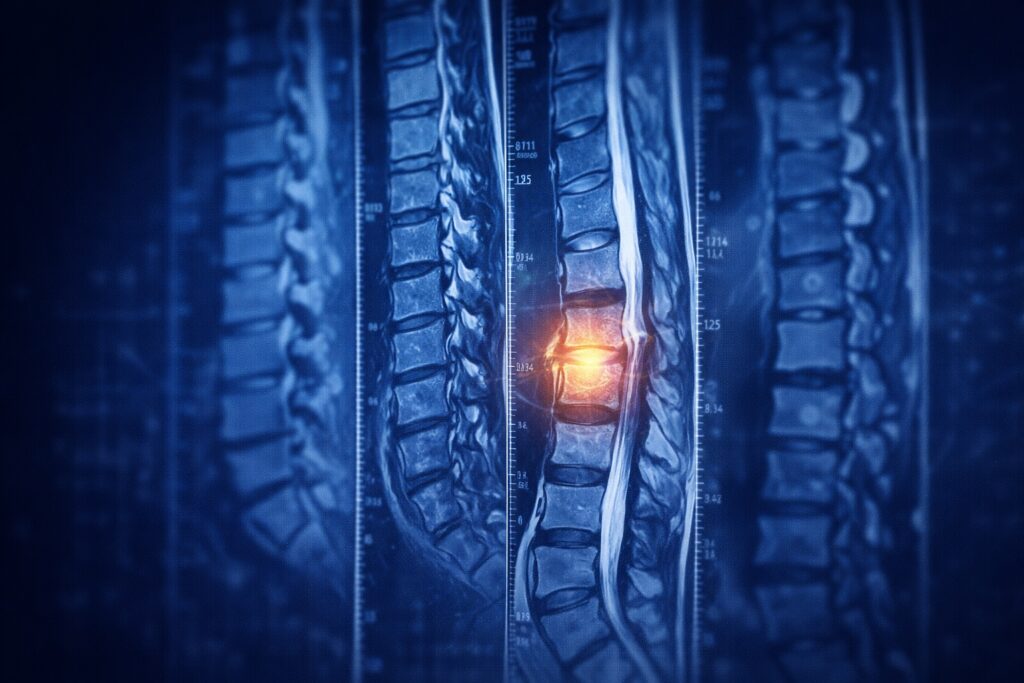
Diagnosing Disc Injuries After a Car Accident
Disc injuries typically do not appear on standard X-rays. Proper diagnosis often requires:
- MRI scans
- CT scans
- Neurological examinations
- EMG or nerve conduction studies
Insurance companies frequently challenge disc injury claims, especially when symptoms are delayed. Detailed medical documentation is essential.
Treatment Options for Herniated or Bulging Discs
Treatment for herniated or bulging discs depends on the severity of the injury, the location of the damaged disc, and the symptoms involved, particularly whether spinal nerves are affected. Some disc injuries respond well to conservative care, while others require more advanced or invasive treatment to prevent long-term damage.
Conservative Treatment
Many patients begin with non-surgical treatment focused on relieving pain, reducing inflammation, and restoring mobility. Common conservative options include:
- Physical therapy to strengthen supporting muscles, improve flexibility, and reduce pressure on the spine
- Chiropractic or rehabilitative care aimed at improving spinal alignment and reducing nerve irritation
- Anti-inflammatory medications or nerve pain medications to manage pain and swelling
- Activity modification, including work restrictions or avoiding movements that worsen symptoms
These treatments are often pursued over several weeks or months and may be effective for mild to moderate disc injuries.
Interventional Treatment
When conservative care does not provide sufficient relief, doctors may recommend interventional procedures designed to target inflammation and nerve compression more directly. These may include:
- Epidural steroid injections to reduce inflammation around compressed spinal nerves
- Nerve blocks to interrupt pain signals and help identify the source of ongoing symptoms
Interventional treatments can provide significant symptom relief and may delay or prevent the need for surgery in some cases.
Surgical Treatment
Surgery may be necessary when disc injuries cause persistent pain, progressive neurological symptoms, or loss of function, despite other treatments. Surgical options may include:
- Discectomy, which removes the damaged portion of the disc pressing on nerves
- Spinal decompression surgery to relieve pressure on the spinal cord or nerve roots
- Spinal fusion in severe cases where spinal instability is present
While surgery can be effective, recovery can be lengthy and may require ongoing rehabilitation and medical care.
Some patients recover fully with conservative treatment, while others require long-term treatment or surgery, depending on the extent of the injury and nerve involvement.
Long-Term Impact of Disc Injuries
Herniated and bulging disc injuries can have a lasting impact on a person’s quality of life, particularly when nerve damage or chronic pain is involved. Long-term effects may include:
- Chronic or recurring pain that interferes with daily activities
- Reduced ability to work, especially in physically demanding or sedentary jobs
- Sleep disruption caused by pain or discomfort
- Ongoing medical expenses, including therapy, medications, and follow-up care
- Increased risk of permanent nerve damage, weakness, or loss of sensation
These long-term consequences often extend well beyond the initial recovery period and can affect a person’s independence, emotional well-being, and financial stability.
Because of this, the long-term impact of disc injuries is a critical part of any personal injury claim. Proper medical documentation and future treatment planning are essential to ensuring that injured individuals are fully compensated for both current and future losses.
Your Legal Rights After a Disc Injury Car Accident
If another driver caused your accident, you may be entitled to compensation for:
- Medical expenses (past and future)
- Lost income and reduced earning capacity
- Pain and suffering
- Emotional distress
- Long-term care needs
Insurance companies often argue disc injuries are pre-existing or degenerative. At WIN, we work with medical experts to prove causation and fight back.
Why Disc Injury Cases Require an Experienced Trial Lawyer
Spinal injury claims are complex and aggressively defended. Insurance companies routinely attempt to minimize these cases. We prepare every case as if it’s going to trial—and that preparation gets results.
Why Legal Representation Matters
Insurance companies often undervalue pain and suffering—offering minimal settlements that ignore your daily struggles. A skilled attorney can:
- Present powerful evidence of your emotional and physical suffering
- Retain expert witnesses to quantify your losses
- Use verdict data to justify higher multipliers or per diem rates
- Argue your case persuasively before a jury
At WIN Trial Lawyers, our team fights to ensure that your recovery reflects the full extent of your suffering—not just your bills.

At WIN Trial Lawyers, we know how devastating distracted driving accidents can be. Victims often face mounting medical bills, lost wages, and emotional trauma. Our team has successfully taken on insurance companies and distracted drivers, recovering millions for injured clients.
If you or a loved one has been injured in a speeding-related car accident, don’t leave your future in the hands of the insurance company. You need experienced trial lawyers who know how to prove liability and fight for maximum compensation.
If you or a loved one has been injured in a distracted driving accident, don’t face this alone. The sooner you act, the stronger your case will be.
🔗 Related Posts:
Frequently Asked Questions (FAQs) About Herniated and Bulging Discs After a Car Accident
Can a car accident cause a herniated or bulging disc?
Yes. The sudden force, twisting, and compression involved in a car accident can damage spinal discs. Even low-speed collisions can cause bulging or herniated discs, particularly through whiplash or spinal compression.
What is the difference between a bulging disc and a herniated disc?
A bulging disc occurs when the disc extends beyond its normal position but remains intact. A herniated disc is more severe and happens when the outer layer of the disc tears, allowing inner material to press on nearby nerves. Both can cause pain and neurological symptoms.
How soon do symptoms of a disc injury appear after a car accident?
Symptoms may appear immediately, but many people experience delayed onset days or weeks after the accident. Swelling and inflammation can increase over time, causing pain, numbness, or weakness to worsen.
Can a herniated or bulging disc heal on its own?
Some disc injuries improve with conservative treatment such as physical therapy and medication. However, others may require injections or surgery. Recovery depends on the severity of the injury and whether nerves are involved.
What are common symptoms of a herniated or bulging disc?
Symptoms often include neck or back pain, radiating pain into the arms or legs, numbness, tingling, muscle weakness, and limited range of motion. Pain may worsen with sitting, standing, or movement.
How are disc injuries diagnosed?
Disc injuries typically require advanced imaging such as MRI or CT scans. X-rays often do not show disc damage. Neurological exams and nerve studies may also be used to evaluate nerve involvement.
Can insurance companies deny a disc injury claim?
Yes. Insurance companies often argue that disc injuries are degenerative, pre-existing, or unrelated to the accident—especially when symptoms are delayed. Strong medical documentation and experienced legal representation are essential.
What compensation is available for a disc injury after a car accident?
You may be entitled to compensation for medical expenses, future treatment, lost wages, reduced earning capacity, pain and suffering, and long-term disability related to the disc injury.
Do I need surgery for a herniated disc?
Not always. Many patients improve with non-surgical treatment. Surgery is typically considered only when conservative care fails or when there is progressive nerve damage or loss of function.
How long do I have to file a claim for a disc injury in California?
In California, most car accident injury claims must be filed within two years of the accident date. Waiting too long can harm your case, especially when dealing with disc injuries.
Should I hire a lawyer for a herniated or bulging disc claim?
Yes. Disc injury cases are medically complex and aggressively defended. An experienced car accident trial lawyer can work with medical experts, counter insurance company arguments, and fight for full compensation.