When Breaking the Law Automatically Establishes Negligence
When someone is injured because another party violated a safety law, California law provides a powerful shortcut for proving fault.
That doctrine is called negligence per se, and it is codified in California Evidence Code § 669.
Instead of having to prove every element of negligence from scratch, the law allows the court to presume negligence when a defendant breaks a safety statute and causes harm. In serious injury cases, this can completely change the balance of power.
What Evidence Code § 669 Does
Under Evidence Code § 669, a defendant is presumed negligent if four elements are met:
- The defendant violated a statute, ordinance, or regulation
- The violation caused injury or death
- The injury resulted from an occurrence the law was designed to prevent
- The injured person was within the class of people the law was designed to protect
When these elements are satisfied, negligence is presumed, shifting the burden to the defense to explain why the violation should be excused.
This is a major advantage for injured victims.
Simple Example: Traffic Law Violation
Imagine this scenario:
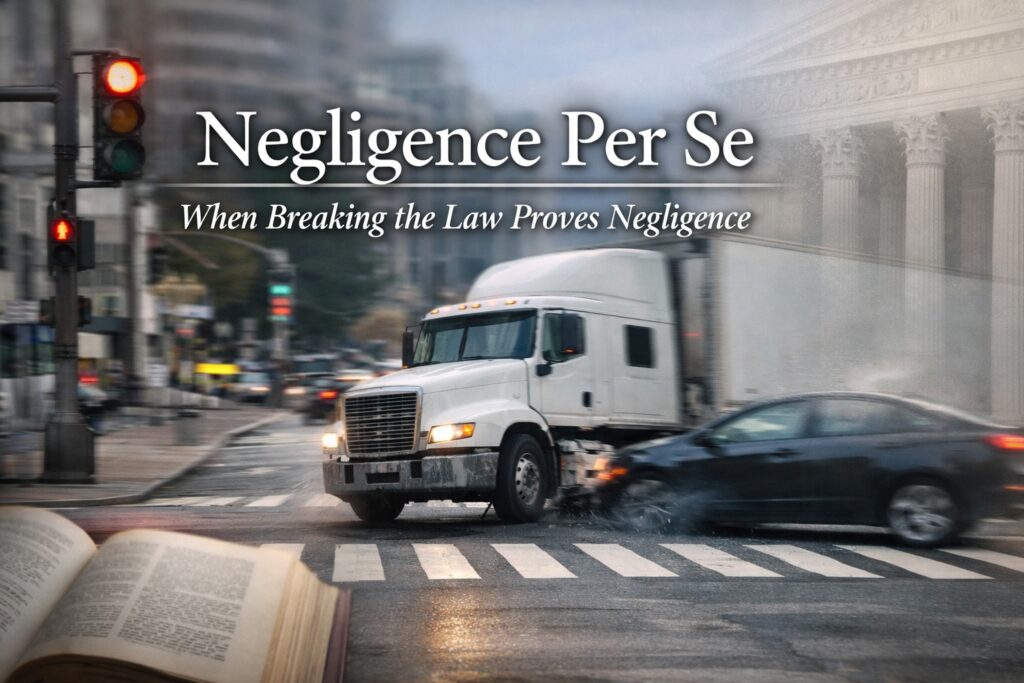
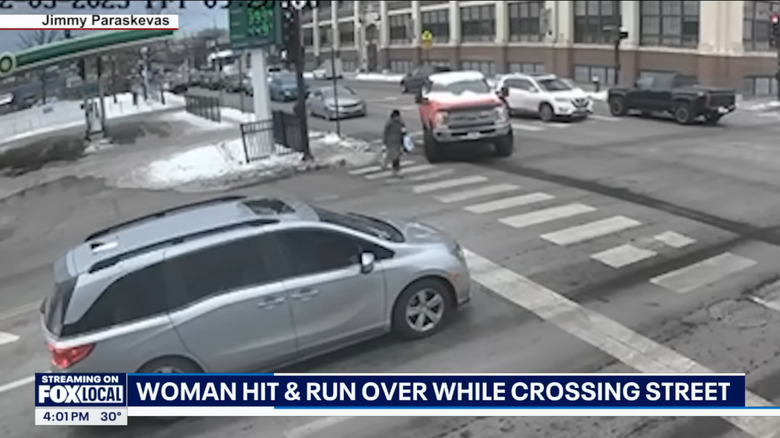
A truck driver runs a red light in violation of the California Vehicle Code and strikes a pedestrian who is lawfully in a crosswalk.
Traffic laws are specifically designed to protect pedestrians from exactly this type of harm.
Because the driver violated a safety statute:
- Negligence is presumed
- The injured pedestrian does not have to prove the driver acted “unreasonably”
- The defense must now rebut the presumption
In real-world litigation, that shift can be decisive.
Where Negligence Per Se Is Most Powerful
Negligence per se frequently applies in high-risk, rule-heavy environments, including:
🚗 Traffic & Transportation Accidents
- Running red lights or stop signs
- Speeding violations
- DUI or impaired driving
- Commercial vehicle safety violations
🏗️ Construction & Worksite Injuries
- OSHA and Cal/OSHA violations
- Failure to provide fall protection
- Unsafe scaffolding or trenching
- Equipment operation violations
🏢 Building & Premises Code Violations
- Fire code violations
- Unsafe stairways or railings
- Inadequate lighting or egress
- Failure to comply with accessibility laws
⚙️ Industrial & Machinery Accidents
- Missing guards or emergency shutoffs
- Violations of safety manuals or regulations
- Failure to follow lock-out/tag-out rules
- Inadequate warnings or instructions
In each of these cases, the rule itself becomes the evidence.
Why Negligence Per Se Changes the Case
Negligence per se does not automatically guarantee victory, but it dramatically strengthens an injury claim by:
- Eliminating arguments about “reasonable care”
- Narrowing the issues for trial
- Increasing settlement pressure
- Undermining defense blame-shifting strategies
- Providing juries with a clear, rule-based framework
Instead of debating subjective behavior, the case becomes straightforward:
Was the law violated — and did that violation cause harm?
Common Defense Arguments (and Why They Fail)
Defendants often try to escape negligence per se by claiming:
- The law didn’t apply to them
- The violation was excusable
- The injured person wasn’t in the protected class
- The injury was unrelated to the violation
These defenses require evidence, not speculation — and many fail once records, logs, videos, and expert testimony are examined.
This is why early investigation matters.
Why Experienced Trial Lawyers Matter
Negligence per se cases hinge on:
- Identifying the correct statute or regulation
- Proving the violation through documents and experts
- Connecting the violation directly to the injury
- Blocking defense attempts to dilute the presumption
At WIN Trial Lawyers, we aggressively pursue negligence-per-se claims in serious injury and wrongful death cases — especially those involving commercial vehicles, industrial accidents, and regulatory violations.
Related WIN Trial Lawyers Blog Posts
- Brake Failure Accidents: When a Mechanical Failure Turns Deadly
- Failure to Warn or Inadequate Instructions: When Dangerous Machines Put Workers at Risk
- Industrial Accidents: Hurt on Machinery, Your Rights, Claims, and Legal Options
Injured Because Someone Broke the Law?
If your injury was caused by a clear safety violation, you may have a stronger case than you realize.
📞 Contact WIN Trial Lawyers today for a free consultation.
We know how to turn statutory violations into real accountability — and real results.
Get Help From WIN Injury & Accident Trial Lawyers
Why Legal Representation Matters
Insurance companies often undervalue pain and suffering—offering minimal settlements that ignore your daily struggles. A skilled attorney can:
- Present powerful evidence of your emotional and physical suffering
- Retain expert witnesses to quantify your losses
- Use verdict data to justify higher multipliers or per diem rates
- Argue your case persuasively before a jury
At WIN Trial Lawyers, our team fights to ensure that your recovery reflects the full extent of your suffering—not just your bills.

At WIN Trial Lawyers, we know how personal injury claims can be can be. Victims often face mounting medical bills, lost wages, and emotional trauma. Our team has successfully taken on insurance companies and third parties, recovering millions for injured clients.
If you or a loved one has been injured in an accident, don’t leave your future in the hands of the insurance company. You need experienced trial lawyers who know how to prove liability and fight for maximum compensation.
If you or a loved one has been injured, don’t face this alone. The sooner you act, the stronger your case will be.
🔗 Related Posts:
Frequently Asked Questions: Evidence Code § 669 & Negligence Per Se
What is negligence per se in California?
Negligence per se is a legal doctrine that allows a court to presume negligence when a defendant violates a safety law and that violation causes injury. It is codified in California Evidence Code § 669.
How is negligence per se different from ordinary negligence?
Ordinary negligence requires proof that a defendant failed to act reasonably. Negligence per se replaces that analysis with a statutory violation, making negligence presumed rather than debated.
Does negligence per se automatically mean the defendant loses?
No. It creates a presumption, not automatic liability. The defendant may attempt to rebut the presumption, but the burden shifts to the defense.
What laws can support a negligence per se claim?
Any statute, ordinance, or regulation designed to protect safety, including:
- California Vehicle Code
- OSHA and Cal/OSHA regulations
- Building and fire codes
- Health and safety regulations
- Equipment and machinery safety rules
Do traffic violations qualify for negligence per se?
Yes. Violations such as running red lights, speeding, DUI, or failing to yield often support negligence per se claims in car, truck, and pedestrian accidents.
Can a citation or ticket prove negligence per se?
A citation alone is not conclusive, but it is strong evidence of a statutory violation and can significantly support a negligence per se argument.
What if the defendant was never ticketed?
Negligence per se can still apply. Civil liability does not require criminal charges or traffic citations.
Does negligence per se apply to commercial truck accidents?
Absolutely. Trucking cases often involve violations of:
- Federal Motor Carrier Safety Regulations (FMCSRs)
- Hours-of-service rules
- Vehicle maintenance regulations
These violations frequently trigger negligence per se.
Can negligence per se apply in construction accidents?
Yes. Construction injury cases commonly rely on OSHA or Cal/OSHA violations, which are designed to protect workers from serious harm.
Does negligence per se apply to workplace injuries?
It can apply in third-party injury cases, such as when a subcontractor, manufacturer, or property owner violates safety laws.
Does negligence per se apply to premises liability cases?
Yes. Building code, fire code, and safety regulation violations can create a presumption of negligence against property owners.
Can a business be liable under negligence per se?
Yes. Companies, corporations, and employers can all be held liable when their statutory violations cause injury.
What if multiple safety laws were violated?
Multiple violations can strengthen a negligence per se claim and significantly increase liability exposure.
Does negligence per se apply to defective or dangerous machinery?
Yes. Violations involving machine guarding, warnings, emergency shutoffs, or operating instructions often support negligence per se claims.
Can negligence per se apply to product liability cases?
It can, particularly when a manufacturer violates safety standards or regulations governing product design, labeling, or warnings.
Does negligence per se eliminate comparative fault?
No. California’s comparative fault rules still apply, but negligence per se often limits the defense’s ability to shift blame.
What must the plaintiff prove under Evidence Code § 669?
The plaintiff must show:
- A law was violated
- The violation caused injury
- The injury was the type the law was designed to prevent
- The plaintiff was within the protected class
Who decides whether negligence per se applies?
The court determines whether the statute qualifies, while the jury often decides whether the violation occurred and caused the injury.
Can negligence per se apply in wrongful death cases?
Yes. If a statutory violation causes a fatal injury, negligence per se may apply in wrongful death claims.
Does negligence per se apply to pedestrian accidents?
Very often. Traffic laws are specifically designed to protect pedestrians, making these cases especially strong.
What defenses are commonly raised against negligence per se?
Defendants often argue:
- The law did not apply
- The violation was excusable
- The injury was unrelated
- The plaintiff was not in the protected class
Can negligence per se be used in settlement negotiations?
Yes. It significantly increases leverage and often leads to higher settlement values.
Does negligence per se make cases resolve faster?
Frequently, yes. Clear statutory violations reduce factual disputes and narrow trial issues.
Can negligence per se be proven without expert testimony?
Sometimes, but expert testimony is often used to explain regulatory standards and causation.
Is negligence per se limited to serious injury cases?
No, but it is most impactful in catastrophic injury and wrongful death cases where safety rules are critical.
Can negligence per se apply to rideshare accidents?
Yes. Violations of traffic laws or transportation regulations can support negligence per se claims against drivers or companies.
Does negligence per se apply to bicycle accidents?
Yes. Laws governing right-of-way, bike lanes, and safe passing distances are often involved.
What evidence is used to prove negligence per se?
Common evidence includes:
- Police or inspection reports
- Safety manuals and regulations
- Surveillance or dash-cam footage
- Expert testimony
- Maintenance and training records
Can negligence per se apply even if the violation was unintentional?
Yes. Intent is not required — only violation and causation.
Why should I hire a lawyer for a negligence per se case?
These cases require identifying the correct statute, proving the violation, and defeating defense excuses. Experienced trial lawyers know how to do this effectively.
How can WIN Trial Lawyers help with negligence per se cases?
WIN Trial Lawyers investigates safety violations, preserves evidence, and aggressively pursues maximum compensation when the law has been broken.
Is there a deadline to bring a negligence per se claim?
Yes. California statutes of limitation apply, and delays can destroy critical evidence.
What should I do if I believe a safety law caused my injury?
Document everything and speak with a trial lawyer immediately to protect your rights.