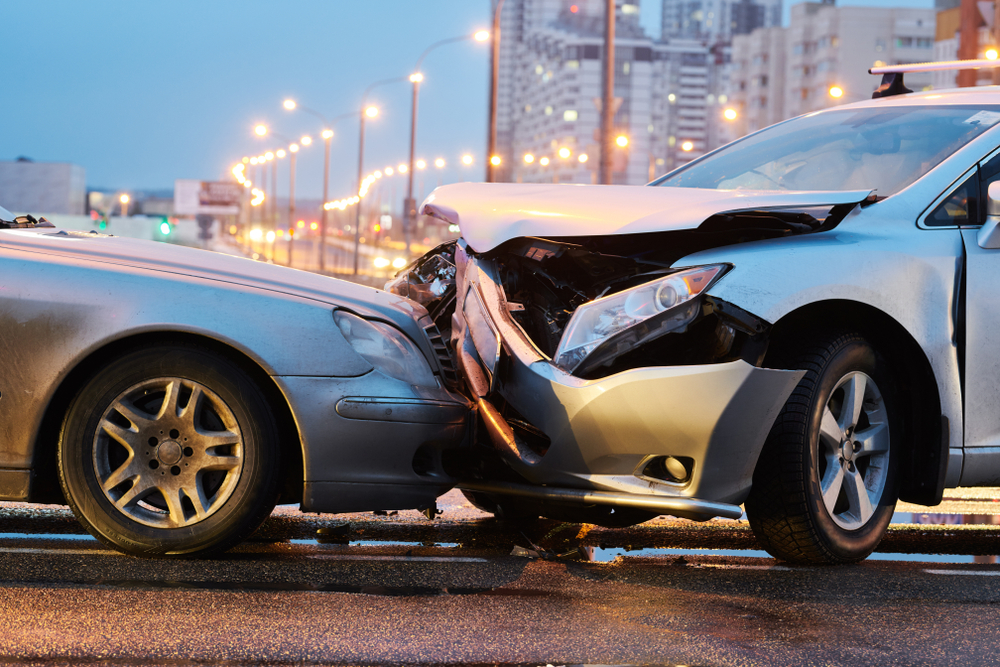


After a car crash, it’s common to walk away thinking you’re fine—no broken bones, no visible cuts, no immediate pain. But concussions often don’t announce themselves right away. Hours or even days later, symptoms like dizziness, headaches, brain fog, nausea, or unusual fatigue can begin to surface. Many people brush these off as stress or soreness, not realizing they may be dealing with a traumatic brain injury.
This delayed onset is what makes concussions so dangerous. Without proper diagnosis and treatment, even a so-called “mild” concussion can lead to long-term cognitive, emotional, and physical problems. Understanding the warning signs—and your legal rights after a crash—is critical to protecting both your health and your potential compensation.
What Is a Concussion?
A concussion is a form of traumatic brain injury (TBI) caused by a sudden force that disrupts normal brain function. In car accidents, this force doesn’t always require a direct blow to the head. Concussions commonly occur when:
- Your head strikes the steering wheel, dashboard, window, or headrest
- Your body experiences a sudden stop or violent movement that causes the brain to shift inside the skull
- You suffer a whiplash-type motion where the head snaps forward and backward
Because the brain is soft and suspended in fluid, rapid movement can cause it to bounce or twist within the skull, leading to chemical changes and microscopic damage that standard imaging tests may not immediately detect.
While concussions are often labeled as “mild” TBIs, that term refers to how they are classified medically—not how they feel or how long they last. Many concussion victims experience symptoms that interfere with work, concentration, memory, sleep, and emotional regulation for weeks, months, or longer.
What makes concussions especially challenging is that symptoms are often invisible. There may be no bruising, no bleeding, and no clear outward signs—yet the impact on daily life can be significant. That’s why early evaluation, proper medical documentation, and legal guidance are so important after a car accident, even when injuries aren’t immediately obvious.
Common Symptoms of a Concussion After a Car Accident
Concussion symptoms don’t always appear immediately after a crash. In many cases, adrenaline masks the initial injury, and symptoms may develop hours or even days later. That’s why it’s important to monitor your condition closely in the days following a car accident.
Common concussion symptoms include:
- Headaches or pressure in the head, ranging from mild to severe and often worsening with activity
- Dizziness, lightheadedness, or loss of balance, especially when standing or walking
- Nausea or vomiting, which may occur shortly after the accident or develop later
- Blurred vision, double vision, or sensitivity to light and noise
- Difficulty concentrating, thinking clearly, or remembering recent events
- Mood or personality changes, including irritability, anxiety, depression, or emotional sensitivity
- Fatigue, drowsiness, or unusual sleep patterns, such as sleeping much more or less than normal
If you experience any of these symptoms after a car accident—even if they seem mild—seek medical attention immediately. A healthcare provider can evaluate you through neurological exams, cognitive testing, and, when appropriate, imaging studies to rule out more serious brain injury and document your condition.
Why You Should Never Ignore a Concussion
Concussions are often misunderstood and minimized, but they are serious brain injuries that deserve prompt medical care. While some symptoms may improve on their own, others can worsen or linger without proper treatment and rest.
Untreated concussions can lead to long-term cognitive, emotional, and neurological problems, including chronic headaches, memory loss, concentration difficulties, mood disorders, and sleep disruption. In some cases, victims develop post-concussion syndrome, a condition where symptoms persist for months or even years, interfering with work performance, personal relationships, and overall quality of life.
Delaying or avoiding medical treatment can also harm your legal claim. Insurance companies frequently argue that delayed treatment means the injury was not serious or was unrelated to the accident. Without timely medical records, it becomes easier for insurers to dispute the severity, cause, or duration of your symptoms.
Prompt diagnosis not only protects your health—it creates the medical documentation necessary to support a full and fair injury claim.
Proving a Concussion in a Personal Injury Claim
Concussions can be challenging to prove because they are often invisible injuries. Unlike broken bones or lacerations, concussions don’t always appear on X-rays, CT scans, or MRIs—especially in the early stages. Insurance companies frequently exploit this fact to downplay or deny legitimate brain injury claims.
That said, a concussion can be proven through careful documentation and strategic evidence, including:
- Medical records documenting your symptoms, diagnosis, treatment plan, and follow-up care from emergency providers, neurologists, or primary care physicians
- Accident reports and photographs showing vehicle damage, airbag deployment, or areas where your head may have struck the interior of the car
- Witness statements describing changes in your behavior, cognition, balance, or alertness immediately after the crash
- Expert testimony from neurologists, neuropsychologists, or rehabilitation specialists who can explain how concussions occur and how your symptoms relate to the collision
- Personal journals or daily logs detailing headaches, cognitive difficulties, mood changes, missed work, and limitations in daily activities
Together, this evidence creates a clear timeline linking the car accident to your concussion and demonstrates how the injury has affected your life. An experienced personal injury attorney knows how to collect, preserve, and present this evidence to counter insurance tactics and establish the full impact of the injury.
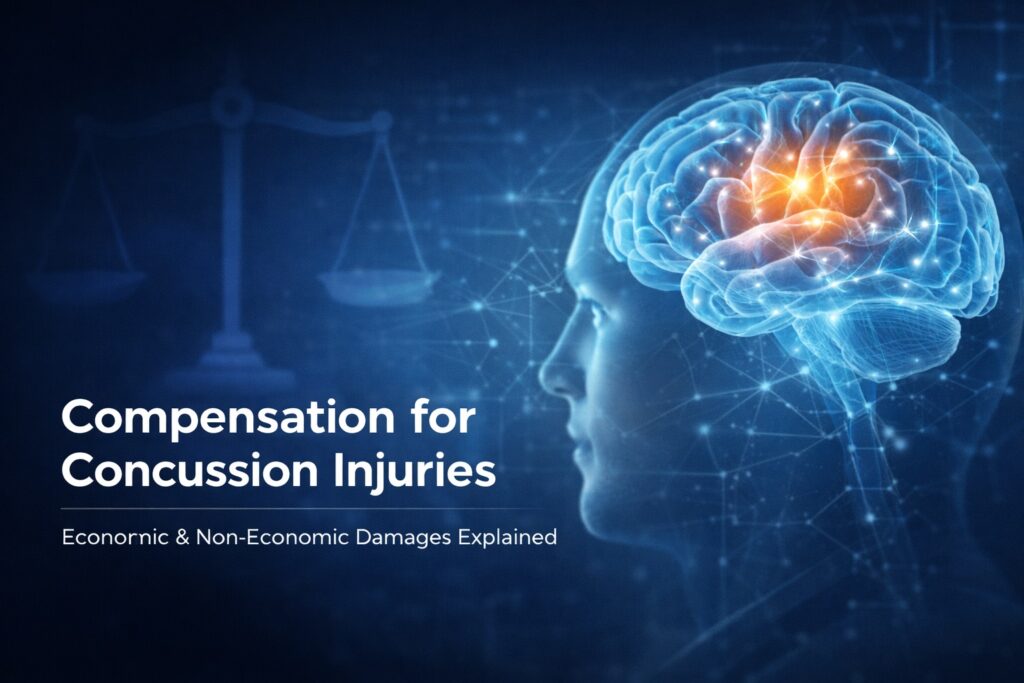
Compensation for Concussion Injuries in California
If another driver’s negligence caused your concussion, California law allows you to seek compensation for both economic and non-economic damages. Depending on the severity and duration of your symptoms, recoverable damages may include:
- Medical expenses, including emergency care, neurological evaluations, imaging, medication, cognitive therapy, and future treatment needs
- Lost wages, reduced earning capacity, or the inability to return to the same job or workload
- Pain and suffering, reflecting the physical discomfort and limitations caused by the injury
- Emotional distress, such as anxiety, depression, sleep disturbances, or personality changes
- Loss of enjoyment of life or long-term disability, when symptoms interfere with work, relationships, or everyday activities
In more serious cases—particularly where the at-fault driver engaged in reckless or egregious behavior such as texting while driving, excessive speeding, or driving under the influence—punitive damages may be available. These damages are intended to punish dangerous conduct and deter similar behavior in the future.
Because concussions can have lasting and unpredictable effects, it’s important to evaluate not just current losses, but also future medical and vocational impacts. A skilled personal injury attorney can assess the true value of your claim and fight for compensation that reflects the full scope of your injury—not just what appears on a scan.
How WIN Trial Lawyers Can Help
Insurance companies often downplay head injuries, especially when symptoms aren’t immediately visible. At WIN Trial Lawyers, we know how to fight back. Our attorneys work with top medical experts to prove the full extent of your injury and demand the compensation you deserve.
We’ve helped countless accident victims recover substantial settlements for concussion and brain injury claims — and we’ll do the same for you.
If you’ve suffered a concussion after a car accident, don’t wait to get help.
Contact WIN Trial Lawyers today for a free consultation.

At WIN Trial Lawyers, we know how devastating distracted driving accidents can be. Victims often face mounting medical bills, lost wages, and emotional trauma. Our team has successfully taken on insurance companies and distracted drivers, recovering millions for injured clients.
If you or a loved one has been injured in a speeding-related car accident, don’t leave your future in the hands of the insurance company. You need experienced trial lawyers who know how to prove liability and fight for maximum compensation.
If you or a loved one has been injured in a distracted driving accident, don’t face this alone. The sooner you act, the stronger your case will be.
🔗 Related Posts:
Frequently Asked Questions About Concussion Injury Claims
Can I have a concussion even if imaging tests are normal?
Yes. Many concussions do not appear on X-rays, CT scans, or MRIs. A concussion is typically diagnosed based on symptoms, neurological exams, and cognitive testing. Normal imaging does not mean you are uninjured.
How soon after a car accident do concussion symptoms appear?
Symptoms can appear immediately, hours later, or even days after the crash. Delayed symptoms are common and do not weaken your claim—as long as you seek medical care once symptoms arise.
What if I didn’t lose consciousness?
Loss of consciousness is not required for a concussion diagnosis. Many people with concussions never black out but still suffer significant brain injury symptoms.
How long do concussion symptoms usually last?
Recovery varies. Some people improve within weeks, while others experience symptoms for months or longer. In some cases, victims develop post-concussion syndrome, where symptoms persist long-term and affect work and daily life.
Can insurance companies deny a concussion claim because it’s a “mild” injury?
They often try—but “mild” refers to medical classification, not impact or seriousness. Concussions can cause significant disruption to employment, cognition, and emotional health, all of which are compensable under California law.
What if I waited a few days before seeing a doctor?
While prompt care is always best, a delay does not automatically bar your claim. What matters is that your symptoms are documented and medically linked to the accident. An attorney can help address and explain treatment delays.
Can a concussion affect my ability to work?
Yes. Many concussion victims struggle with concentration, memory, screen time, fatigue, or emotional regulation—making it difficult or impossible to return to work immediately or perform at the same level. Lost income and reduced earning capacity may be recoverable.
Is a concussion considered a permanent injury?
Some concussions fully resolve, while others cause lasting or permanent symptoms. The determination depends on medical evidence, duration of symptoms, and functional limitations—not the label used at the outset.
Can I recover pain and suffering for a concussion?
Absolutely. California law allows compensation for pain and suffering, emotional distress, and loss of enjoyment of life, even when injuries are not visible.
Do I need a lawyer for a concussion claim?
Concussion cases are often more aggressively disputed by insurance companies because they lack visible proof. An experienced personal injury attorney can gather medical evidence, work with specialists, counter insurer arguments, and pursue full compensation.
What if my concussion happened while I was working?
You may have both a workers’ compensation claim and a personal injury claim, depending on how the accident occurred. Coordinating these claims properly is critical to maximizing recovery and avoiding lien issues.