

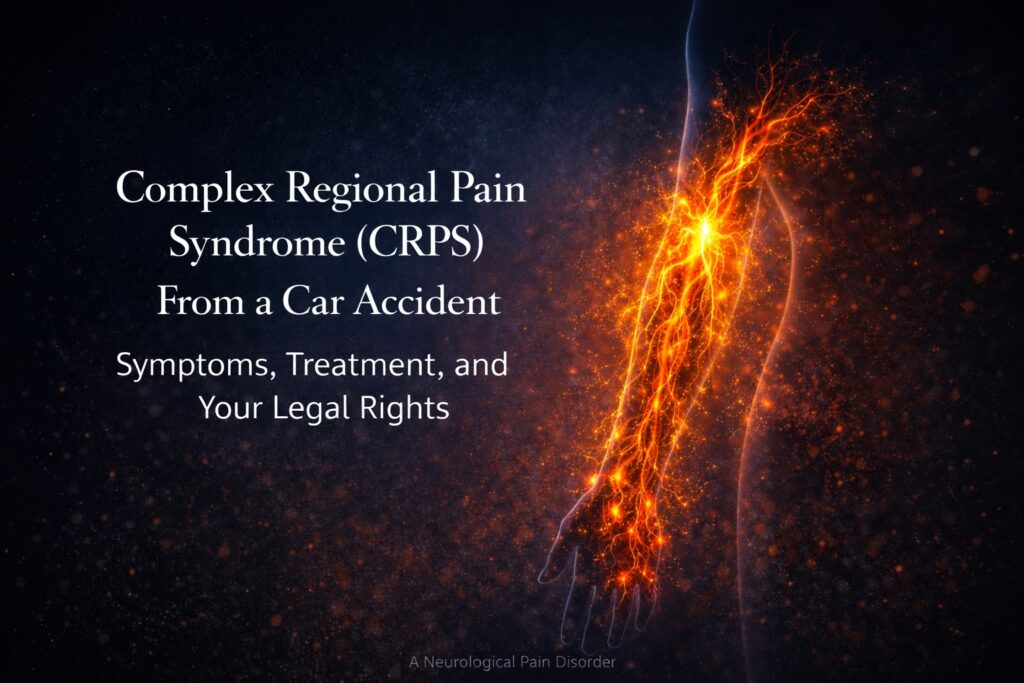
Car accidents can cause far more than broken bones or soft-tissue injuries. In some cases, they trigger a rare but devastating neurological condition known as Complex Regional Pain Syndrome (CRPS)—a life-altering disorder marked by chronic, severe pain that is often out of proportion to the original injury.
CRPS is frequently misdiagnosed, delayed, or dismissed by insurance companies, yet it can permanently impact a person’s ability to work, function, and live independently.
At WIN Injury & Accident Trial Lawyers, we represent car accident victims suffering from CRPS and fight aggressively to ensure these serious injuries are fully recognized, documented, and compensated.
What Is Complex Regional Pain Syndrome (CRPS)?
Complex Regional Pain Syndrome (CRPS) is a chronic, often debilitating pain condition that typically develops after trauma, including car accidents, even when the initial injury appears relatively minor. What distinguishes CRPS from ordinary injury-related pain is that the pain is disproportionate to the original trauma and persists long after the injury should have healed.
CRPS involves dysfunction of the central and peripheral nervous systems, causing abnormal pain signaling, exaggerated inflammatory responses, and altered blood flow in the affected area. These neurological changes can lead to severe pain, sensitivity, swelling, and functional impairment that progressively worsen if not diagnosed and treated early.
The condition most often affects an arm, hand, leg, or foot, but in some cases it can spread to adjacent areas or even to other limbs over time. As CRPS progresses, it can interfere with movement, temperature regulation, and normal use of the affected limb, significantly impacting daily life.
CRPS is divided into two recognized types:
- CRPS Type I (formerly Reflex Sympathetic Dystrophy): Occurs without a confirmed nerve injury, often following soft-tissue trauma, sprains, or fractures.
- CRPS Type II (formerly Causalgia): Occurs after a confirmed nerve injury, such as nerve compression, stretching, or surgical damage.
Despite this distinction, both forms can be equally severe and disabling, and both may result in chronic pain, loss of function, and long-term disability.
How Car Accidents Cause CRPS
CRPS can develop after a car accident due to trauma that disrupts normal nerve signaling and pain regulation, even when there is no obvious structural damage. Car accidents expose the body to sudden forces that can overwhelm the nervous system and trigger abnormal pain responses. Common triggering injuries include:
- Whiplash injuries affecting the neck, shoulders, or spine
- Fractures or dislocations of the arms, legs, hands, or feet
- Soft-tissue injuries, including sprains, strains, and bruising
- Nerve compression or stretching caused by impact or swelling
- Surgical intervention following accident-related injuries
Importantly, CRPS can develop even when imaging studies appear normal. The underlying nervous system injury may be microscopic, functional, or chemical in nature, rather than structural. This means standard X-rays, MRIs, or CT scans may not clearly show the cause of the pain, even though the condition is very real.
This lack of obvious imaging findings is one of the primary reasons insurance companies frequently dispute CRPS claims, arguing that the condition is subjective or unrelated to the accident. In reality, CRPS is a well-documented neurological disorder recognized by the medical community, particularly when symptoms and clinical findings are properly documented.
Common Symptoms of CRPS After a Car Accident
CRPS symptoms typically worsen over time and often progress in stages. Early symptoms may be subtle and easily dismissed, while later-stage symptoms can become severe, persistent, and disabling if treatment is delayed.
Early-Stage CRPS Symptoms
In the early stages, symptoms may appear days or weeks after a car accident and are often mistaken for routine post-injury pain. Early warning signs include:
- Severe, burning, or stabbing pain that is disproportionate to the original injury
- Extreme sensitivity to touch, where light contact, clothing, or movement causes significant pain
- Swelling and inflammation in the affected limb
- Skin temperature changes, with the area feeling unusually hot or cold compared to the rest of the body
- Skin color changes, including redness, paleness, or a purplish hue
- Limited range of motion caused by pain and stiffness
At this stage, early and aggressive treatment offers the best chance of symptom control and functional recovery.
Later-Stage CRPS Symptoms
Without prompt treatment, CRPS may progress to later stages where symptoms become more severe and harder to reverse. Later-stage symptoms may include:
- Chronic, unrelenting pain that does not improve with standard treatment
- Muscle weakness, stiffness, or tremors affecting the ability to use the limb
- Significant loss of range of motion and functional impairment
- Changes in skin texture, such as thinning, shiny, or overly dry skin
- Abnormal hair and nail growth, including brittle nails or excessive hair growth
- Persistent swelling and joint stiffness
- Spread of pain to nearby areas or other limbs in some cases
At this stage, CRPS can interfere with work, daily activities, and independence, often requiring long-term medical care and pain management.
⚠️ Important: Early diagnosis is critical. Delayed treatment significantly increases the risk of permanent nerve dysfunction, chronic pain, and long-term disability. If CRPS symptoms are suspected after a car accident, immediate medical evaluation and documentation are essential.
Diagnosing CRPS After a Car Accident
Diagnosing Complex Regional Pain Syndrome (CRPS) can be challenging because there is no single test that definitively confirms the condition. Instead, CRPS is diagnosed clinically using established medical criteria, supported by testing and the exclusion of other possible causes.
The Budapest Diagnostic Criteria
The Budapest Criteria are the most widely accepted medical standard for diagnosing CRPS. Under these criteria, a patient must demonstrate:
- Continuing pain that is disproportionate to the original injury
- Symptoms in at least three of the following four categories:
- Sensory: hyperalgesia (increased pain response) or allodynia (pain from normally non-painful stimuli)
- Vasomotor: temperature asymmetry, skin color changes, or skin color asymmetry
- Sudomotor/Edema: swelling, sweating changes, or sweating asymmetry
- Motor/Trophic: decreased range of motion, weakness, tremors, dystonia, or changes in skin, hair, or nails
- Clinical signs observed by a physician in at least two of these categories
- No other diagnosis that better explains the symptoms
Meeting these criteria establishes CRPS as a recognized neurological disorder, not a subjective complaint.

Diagnostic Testing Used in CRPS Cases
While CRPS is a clinical diagnosis, testing is often used to support the diagnosis and rule out other conditions. These tests may include:
- MRI or CT scans to evaluate soft tissue, swelling, or nerve involvement
- Bone scans to detect abnormal bone metabolism common in early CRPS
- Thermography to identify temperature asymmetry between limbs
- Nerve conduction studies and EMG testing to assess nerve function
- Autonomic testing to evaluate abnormal sweating or blood flow
It is important to understand that normal imaging does not rule out CRPS. Many CRPS patients have normal scans, particularly early in the condition.
Excluding Other Conditions
A critical component of CRPS diagnosis is ruling out other possible explanations for the symptoms. Physicians must exclude conditions such as:
- Peripheral neuropathy
- Infection
- Deep vein thrombosis (DVT)
- Arthritis or inflammatory joint disease
- Compartment syndrome
- Vascular disorders
Insurance companies frequently argue that symptoms are caused by these alternative conditions. Proper medical documentation and specialist evaluation are essential to counter these defenses.

Treatment Progression for CRPS: Early vs. Late Stages
CRPS treatment is most effective when started early. Treatment strategies often evolve as the condition progresses, with more aggressive interventions required in later stages.
Early-Stage CRPS Treatment
In early-stage CRPS, the primary goals are to interrupt abnormal pain signaling, reduce inflammation, and preserve function. Treatment may include:
- Aggressive physical therapy and desensitization therapy to maintain movement and prevent stiffness
- Pain medications and nerve-specific medications to control symptoms
- Anti-inflammatory treatment
- Psychological support, including cognitive-behavioral therapy for pain coping
- Sympathetic nerve blocks to reduce abnormal nerve activity
Early treatment offers the best chance of limiting disease progression and improving long-term outcomes.
Late-Stage CRPS Treatment
When CRPS progresses to later stages, treatment becomes more complex and often focuses on long-term symptom management rather than reversal. Late-stage treatment options may include:
- Chronic pain management programs
- Repeated nerve blocks or injections
- Spinal cord stimulation or other neuromodulation therapies
- Ketamine infusions in select cases
- Assistive devices to support mobility and daily activities
- Ongoing psychological and psychiatric care
Late-stage CRPS may require lifelong treatment and can result in permanent functional limitations.
Why Early Diagnosis and Treatment Matter
Delayed diagnosis and treatment significantly increase the risk of permanent disability, chronic pain, and reduced quality of life. From a legal standpoint, early documentation and consistent treatment are also critical in proving the seriousness and legitimacy of CRPS claims.
At WIN Injury & Accident Trial Lawyers, we work closely with treating physicians and medical experts to ensure CRPS is properly documented, treated, and presented in personal injury cases.
Long-Term Impact of CRPS
Complex Regional Pain Syndrome can be profoundly disabling, affecting nearly every aspect of a person’s physical, emotional, and financial well-being. Unlike many accident-related injuries, CRPS often does not resolve with time and may continue to worsen, requiring ongoing medical care and long-term support.
Common long-term consequences of CRPS include:
- Inability to work or significantly reduced earning capacity, particularly for individuals whose jobs require physical activity, dexterity, or prolonged sitting or standing
- Loss of independence and mobility, with some individuals requiring assistive devices or help with daily activities
- Chronic, unrelenting pain that persists despite standard medical treatment and interferes with normal functioning
- Sleep disruption and ongoing fatigue, which can further impair concentration, mood, and overall health
- Depression, anxiety, and emotional distress, often resulting from long-term pain, lifestyle changes, and uncertainty about recovery
- Significant long-term medical expenses, including pain management, physical therapy, medications, interventional procedures, and psychological care
Over time, CRPS can fundamentally alter a person’s quality of life—affecting relationships, independence, and the ability to participate in activities that were once routine or enjoyable.
Because of its chronic nature, resistance to treatment, and potential for permanent disability, CRPS is often considered a catastrophic injury in personal injury law. This designation reflects not only the severity of the condition, but also the substantial future medical needs, loss of earning potential, and lifelong impact on the injured individual.
Your Legal Rights After a CRPS Diagnosis
If CRPS developed after a car accident caused by another driver’s negligence, you may be entitled to compensation for:
- Past and future medical expenses
- Long-term pain management and treatment
- Lost wages and diminished earning capacity
- Pain and suffering
- Emotional distress
- Permanent disability and loss of quality of life
Insurance companies aggressively fight CRPS claims, often arguing the condition is unrelated or exaggerated. At WIN Injury & Accident Trial Lawyers, we work with medical experts to establish causation and document the full scope of damages.
Get Help From WIN Injury & Accident Trial Lawyers

Why Legal Representation Matters
Insurance companies often undervalue pain and suffering—offering minimal settlements that ignore your daily struggles. A skilled attorney can:
- Present powerful evidence of your emotional and physical suffering
- Retain expert witnesses to quantify your losses
- Use verdict data to justify higher multipliers or per diem rates
- Argue your case persuasively before a jury
At WIN Trial Lawyers, our team fights to ensure that your recovery reflects the full extent of your suffering—not just your bills.

At WIN Trial Lawyers, we know how devastating distracted driving accidents can be. Victims often face mounting medical bills, lost wages, and emotional trauma. Our team has successfully taken on insurance companies and distracted drivers, recovering millions for injured clients.
If you or a loved one has been injured in a speeding-related car accident, don’t leave your future in the hands of the insurance company. You need experienced trial lawyers who know how to prove liability and fight for maximum compensation.
If you or a loved one has been injured in a distracted driving accident, don’t face this alone. The sooner you act, the stronger your case will be.
🔗 Related Posts:
Frequently Asked Questions About CRPS After a Car Accident
Can a car accident really cause CRPS?
Yes. CRPS can develop after trauma caused by a car accident, including fractures, soft-tissue injuries, nerve injuries, or even minor injuries. The condition is linked to abnormal nervous system responses following trauma, not necessarily the severity of the initial injury.
How long after a car accident can CRPS develop?
CRPS often develops weeks or months after the accident, not immediately. Delayed onset is common and does not mean the condition is unrelated to the crash. Early symptoms may be subtle and worsen over time.
Is CRPS considered a permanent condition?
CRPS can be long-term or permanent, especially if not diagnosed and treated early. Some patients experience partial improvement, while others suffer lifelong pain, functional impairment, and disability.
Why do insurance companies dispute CRPS claims?
Insurance companies often challenge CRPS claims because:
- Symptoms are largely based on patient reporting
- Imaging may appear normal
- Diagnosis is clinical rather than test-based
- Symptoms may develop after a delay
These arguments are common but do not mean CRPS is not real or compensable.
How is CRPS diagnosed?
CRPS is diagnosed through a combination of clinical evaluation, patient history, symptom patterns, neurological exams, and the exclusion of other conditions. There is no single test that definitively confirms CRPS.
What are common early warning signs of CRPS?
Early symptoms may include burning pain, extreme sensitivity to touch, swelling, skin temperature changes, color changes, stiffness, or worsening pain that seems out of proportion to the original injury.
What treatments are available for CRPS?
Treatment may include physical therapy, pain medications, nerve blocks, spinal cord stimulation, and long-term pain management. Early and aggressive treatment offers the best chance of symptom control.
Can CRPS spread to other parts of the body?
Yes. In some cases, CRPS can spread beyond the initially affected limb, making early diagnosis and treatment especially important.
Is CRPS considered a catastrophic injury?
Yes. In personal injury cases, CRPS is often treated as a catastrophic or life-altering injury due to its chronic nature, severe pain, and impact on daily functioning and employment.
What compensation can I recover for CRPS?
You may be entitled to compensation for past and future medical expenses, long-term treatment, lost income, reduced earning capacity, pain and suffering, emotional distress, and permanent disability.
Do I need a lawyer for a CRPS car accident claim?
CRPS cases are complex and aggressively defended. An experienced car accident trial lawyer is critical to proving causation, countering insurance defenses, and pursuing full compensation.