
What Does Evidence Code 801 Say?
California Evidence Code 801 governs what expert witnesses are allowed to testify about. While Evidence Code 720 determines who may qualify as an expert, Evidence Code 801 controls what opinions that expert may give once qualified.
In plain English, the statute answers this question:
Are the expert’s opinions based on reliable information and will they actually help the jury?
Expert opinions often decide liability, causation, and damages—so courts strictly control their scope.
The Text of Evidence Code 801
An expert opinion is admissible only if:
(a) The opinion is related to a subject that is sufficiently beyond common experience that it would assist the trier of fact; and
(b) The opinion is based on matter that is of a type that reasonably may be relied upon by an expert in forming an opinion.
Both requirements must be met.
What Is an “Expert Opinion” Under EC 801?
An expert opinion is not speculation, advocacy, or legal argument. It must:
- Help the jury understand complex or technical issues
- Be grounded in reliable information
- Be based on facts, data, or assumptions experts normally rely on
- Stay within the expert’s area of qualification
Expert opinions exist to educate the jury, not replace it.
What Expert Opinions Are Used for in Personal Injury Cases
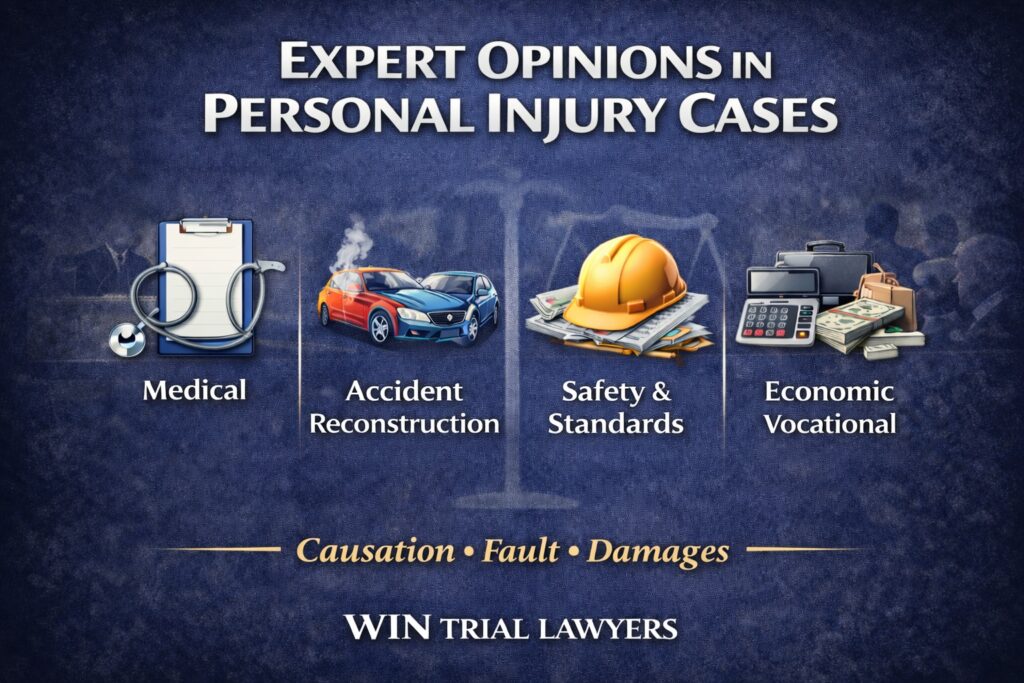
Evidence Code § 801 is especially critical in personal injury litigation because expert opinions often establish the core building blocks of a claim—causation, fault, and damages. These opinions help jurors understand issues that are outside everyday experience and translate complex facts into understandable conclusions.
Medical Causation & Injury Opinions
Medical experts play a central role in almost every injury case. They commonly testify about:
- Whether an accident caused or aggravated an injury, including preexisting conditions
- Diagnosis and prognosis, including expected recovery timelines
- Permanency of injuries and future limitations
- Need for future medical treatment, surgeries, or therapy
- Reasonableness and necessity of care already provided
These opinions often determine whether compensable damages exist at all and how serious they are.
Accident Reconstruction & Liability Opinions
Reconstruction and engineering experts help jurors visualize what happened when events unfolded in seconds. Their opinions often address:
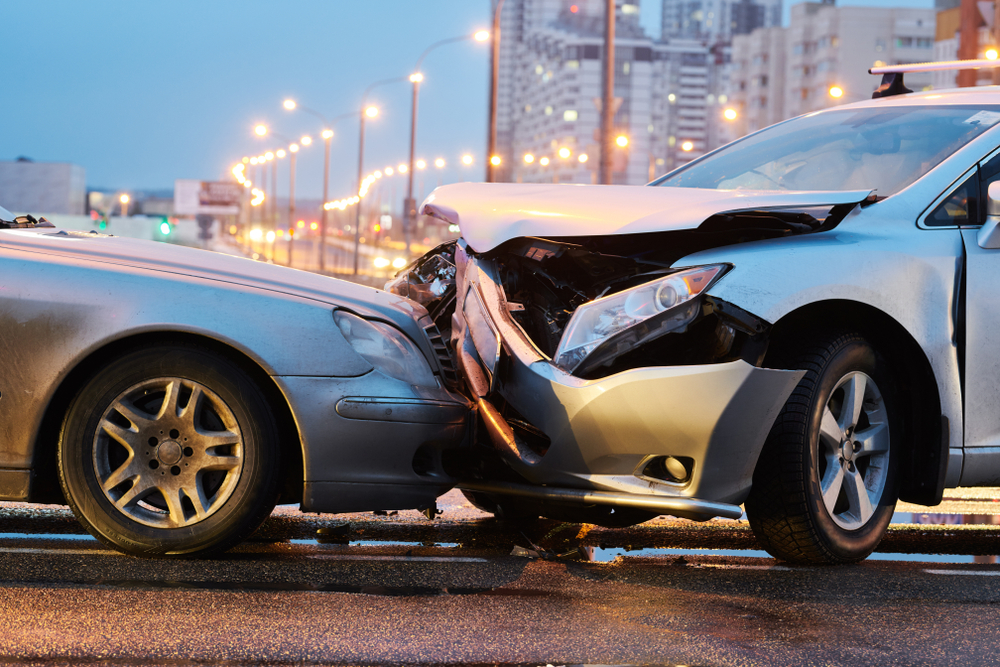
- How a collision or incident occurred
- Speed, braking, impact forces, and points of contact
- Visibility, reaction time, and driver or operator behavior
- Whether conduct complied with or violated safety standards
These opinions help jurors understand how and why the incident happened, especially when eyewitness accounts conflict.
Safety, Human Factors & Standard-of-Care Opinions
Safety and human-factors experts explain how real people interact with environments, products, and hazards. They may opine on:
- Unsafe conditions on property or job sites
- Product design defects or inadequate warnings
- Industry safety rules, codes, and standards
- Human perception, attention, and reaction under stress
These opinions often establish negligence, defect, or unreasonable risk.
Economic & Damages Opinions
Economic experts translate injuries into financial impact. They commonly testify regarding:
- Past and future lost wages
- Loss of future earning capacity
- Present value of future losses
- Projected medical costs and life-care expenses
- Household services and economic contributions
These opinions give jurors a framework for calculating fair compensation.
Vocational & Functional Capacity Opinions
Vocational experts connect medical limitations to real-world work consequences. Their opinions may include:
- Ability or inability to return to prior employment
- Physical and cognitive work restrictions
- Feasibility of retraining or alternative employment
- Loss of employability in the open labor market
These opinions help jurors understand how injuries affect a person’s future, not just their past.
What Expert Opinions Are NOT Allowed to Do
Under Evidence Code 801, expert opinions cannot:
- Offer legal conclusions (e.g., “the defendant was negligent”)
- Speculate beyond the evidence
- Rely on unsupported assumptions
- Act as a mouthpiece for attorney arguments
- Testify outside the expert’s expertise
Courts frequently exclude or limit opinions that cross these lines.
The “Reasonable Reliance” Requirement
Experts may rely on:
- Medical records
- Imaging studies
- Industry data
- Peer-reviewed literature
- Reports from other professionals
They may not rely on:
- Unsupported hearsay with no professional basis
- Pure speculation
- Facts contradicted by the record
The focus is whether experts in the field reasonably rely on similar information.
Evidence Code 801 vs. Expert Qualifications
| Evidence Code 720 | Evidence Code 801 |
|---|---|
| Who may testify | What they may say |
| Qualification | Opinion admissibility |
| Judge decides threshold | Judge controls scope |
| Background-focused | Methodology-focused |
A qualified expert can still have opinions excluded under § 801.
Why Evidence Code 801 Is So Important in Injury Trials
Expert opinions often:
- Establish causation
- Explain technical facts
- Drive damages awards
- Shape settlement leverage
Limiting or excluding expert opinions can dramatically alter trial outcomes.
How WIN Trial Lawyers Uses Evidence Code 801
At WIN Trial Lawyers, we use EC 801 to:
- Ensure our experts’ opinions are admissible and persuasive
- Exclude speculative or biased defense opinions
- Limit overreaching expert testimony
- Frame clear, jury-focused expert narratives
Expert opinions should clarify—not confuse—the issues jurors must decide.
Get Help From WIN Injury & Accident Trial Lawyers
Why Legal Representation Matters
Insurance companies often undervalue pain and suffering—offering minimal settlements that ignore your daily struggles. A skilled attorney can:
- Present powerful evidence of your emotional and physical suffering
- Retain expert witnesses to quantify your losses
- Use verdict data to justify higher multipliers or per diem rates
- Argue your case persuasively before a jury
At WIN Trial Lawyers, our team fights to ensure that your recovery reflects the full extent of your suffering—not just your bills.

At WIN Trial Lawyers, we know how personal injury claims can be can be. Victims often face mounting medical bills, lost wages, and emotional trauma. Our team has successfully taken on insurance companies and third parties, recovering millions for injured clients.
If you or a loved one has been injured in an accident, don’t leave your future in the hands of the insurance company. You need experienced trial lawyers who know how to prove liability and fight for maximum compensation.
If you or a loved one has been injured, don’t face this alone. The sooner you act, the stronger your case will be.
🔗 Related Posts:
Frequently Asked Questions (FAQs)
What is California Evidence Code 801?
It governs when expert opinions are admissible in California civil trials.
Does EC 801 apply in all civil cases?
Yes, including personal injury, product liability, medical negligence, and business disputes.
Can an expert rely on hearsay?
Yes, if it is the type of information experts reasonably rely on in their field.
Can experts testify about ultimate issues?
They may address ultimate factual issues, but not legal conclusions.
Can a judge limit expert opinions?
Yes. Judges frequently limit opinions that exceed the statute’s requirements.
Can expert opinions be challenged before trial?
Yes. Challenges are commonly raised through motions in limine.
Does EC 801 require scientific certainty?
No. It requires reasonable professional reliability, not absolute certainty.
Can an expert’s opinion be excluded even if the expert is qualified?
Yes. Qualification alone does not guarantee admissibility of opinions.
Why are expert opinions so important in personal injury cases?
Because jurors rely on experts to understand injuries, causation, and damages beyond everyday experience.
How does WIN Trial Lawyers challenge defense expert opinions?
By exposing speculative assumptions, unreliable methods, and opinions that exceed the expert’s role.