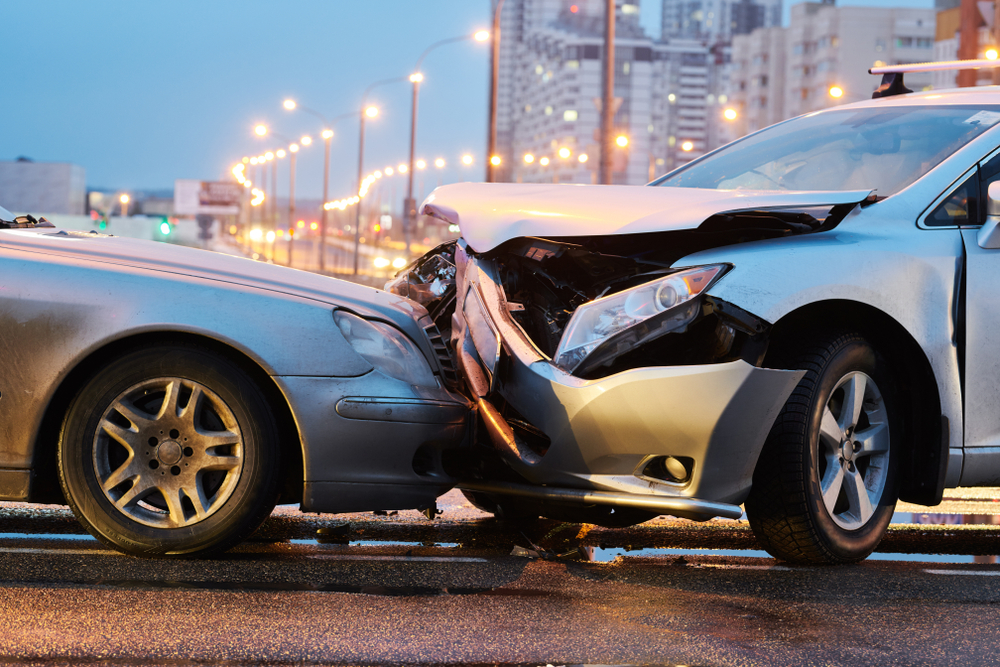

Nearly every personal injury case in California is grounded in a single legal principle: people must act with reasonable care to avoid harming others.
That principle is codified in California Civil Code § 1714(a), which forms the backbone of negligence law in this state. Whether a case involves a car accident, a slip-and-fall, a dangerous property condition, or everyday carelessness, this statute is almost always the starting point for determining legal responsibility.
At WIN Injury & Accident Trial Lawyers, Civil Code § 1714(a) is central to how we evaluate, litigate, and prove personal injury claims.
California Code, Civil Code – CIV § 1714
(a) Everyone is responsible, not only for the result of his or her willful acts, but also for an injury occasioned to another by his or her want of ordinary care or skill in the management of his or her property or person, except so far as the latter has, willfully or by want of ordinary care, brought the injury upon himself or herself. The design, distribution, or marketing of firearms and ammunition is not exempt from the duty to use ordinary care and skill that is required by this section. The extent of liability in these cases is defined by the Title on Compensatory Relief.
What Civil Code § 1714(a) Means in Plain English
In simple terms, the law requires people and businesses to behave the way a reasonably careful person would under similar circumstances. When someone fails to do so — and that failure causes injury — they can be held legally responsible.
This duty applies broadly. It governs how drivers operate vehicles, how property owners maintain their premises, how businesses interact with the public, and how individuals conduct themselves in everyday situations.
Importantly, the law does not require intentional wrongdoing. Carelessness alone is enough if it creates an unreasonable risk of harm.
How Courts Use Civil Code § 1714(a)
Courts rely on this statute to answer a basic question in injury cases:
Did the defendant act reasonably under the circumstances?
Judges and juries evaluate factors such as:
- What the defendant knew or should have known
- Whether the risk of harm was foreseeable
- Whether reasonable steps could have been taken to prevent injury
- How the defendant’s conduct compares to ordinary standards of care
If the conduct falls below what a reasonably careful person would do, liability may attach.
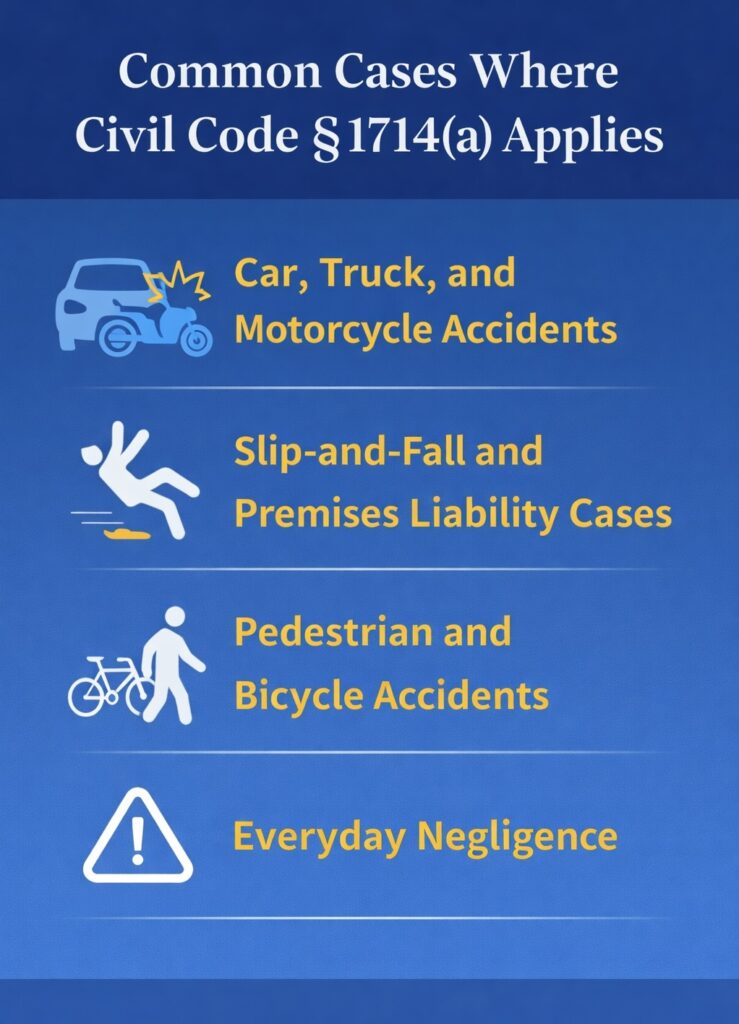
Common Cases Where Civil Code § 1714(a) Applies
Civil Code § 1714(a) is not limited to one type of accident. It applies across nearly all negligence-based personal injury claims, including:
Car, Truck, and Motorcycle Accidents
Drivers have a duty to operate their vehicles safely. Distracted driving, unsafe lane changes, following too closely, and failure to yield all implicate the duty of reasonable care.
Slip-and-Fall and Premises Liability Cases
Property owners must take reasonable steps to keep their premises safe. Dangerous conditions that are ignored, unaddressed, or left without warning often violate this duty.
Pedestrian and Bicycle Accidents
Drivers and property owners alike must account for the presence of pedestrians and cyclists and act accordingly.
Everyday Negligence
From unsecured objects to careless actions that create hazards, ordinary negligence claims frequently rely on this statute.
How Civil Code § 1714(a) Fits With Other Injury Laws
This statute rarely stands alone. It often works together with:
- Comparative negligence rules that reduce damages if multiple parties share fault
- Safety statutes and regulations that can strengthen liability
- Damages laws that define what compensation is available
Civil Code § 1714(a) establishes the duty, while other laws define how fault is allocated and what damages may be recovered.
Why This Statute Matters to Injured Victims
Understanding Civil Code § 1714(a) helps explain why many injury cases are viable even when:
- No laws were intentionally broken
- The defendant claims the incident was an “accident”
- The injured person was partially at fault
The law recognizes that accidents caused by unreasonable conduct are not unavoidable — and injured people should not bear the financial burden alone.
Proving a Violation of the Duty of Reasonable Care
To succeed in a personal injury case based on Civil Code § 1714(a), evidence often includes:
- Witness testimony
- Photographs or video
- Accident reports
- Expert opinions
- Documentation showing what reasonable precautions were available
Insurance companies frequently argue that their insured acted reasonably. Overcoming that defense requires careful investigation and presentation of the facts.
Speak With a California Personal Injury Lawyer
If you were injured because someone failed to act with reasonable care, Civil Code § 1714(a) may be the foundation of your claim. Understanding how the law applies is one thing — proving it is another.
📞 Call WIN Injury & Accident Trial Lawyers today
📍 Serving Los Angeles and all of California
⚖️ Free consultation | No fee unless we win
Get Help From WIN Injury & Accident Trial Lawyers
Why Legal Representation Matters
Insurance companies often undervalue pain and suffering—offering minimal settlements that ignore your daily struggles. A skilled attorney can:
- Present powerful evidence of your emotional and physical suffering
- Retain expert witnesses to quantify your losses
- Use verdict data to justify higher multipliers or per diem rates
- Argue your case persuasively before a jury
At WIN Trial Lawyers, our team fights to ensure that your recovery reflects the full extent of your suffering—not just your bills.

At WIN Trial Lawyers, we know how personal injury claims can be can be. Victims often face mounting medical bills, lost wages, and emotional trauma. Our team has successfully taken on insurance companies and third parties, recovering millions for injured clients.
If you or a loved one has been injured in an accident, don’t leave your future in the hands of the insurance company. You need experienced trial lawyers who know how to prove liability and fight for maximum compensation.
If you or a loved one has been injured, don’t face this alone. The sooner you act, the stronger your case will be.
🔗 Related Posts:
Civil Code § 1714(a) – Duty of Reasonable Care FAQs
What is Civil Code § 1714(a)?
Civil Code § 1714(a) is the foundational California law that establishes the duty of reasonable care. It requires individuals and businesses to act reasonably to avoid causing harm to others. Most personal injury claims are built on this statute.
Does this law apply even if the injury was an “accident”?
Yes. An incident can still be legally actionable even if it was unintentional. The key question is whether the person or entity failed to act reasonably under the circumstances, not whether they intended to cause harm.
What does “reasonable care” actually mean?
Reasonable care means acting the way an ordinary, careful person would act in a similar situation. This standard changes depending on the circumstances, such as traffic conditions, property hazards, or known risks.
Do I have a case if no specific law was broken?
Yes. Civil Code § 1714(a) applies even when no traffic law, safety regulation, or statute was violated. Ordinary carelessness — such as inattention or failure to address a known hazard — can still support liability.
How is Civil Code § 1714(a) different from negligence per se?
Civil Code § 1714(a) establishes general negligence. Negligence per se applies when a defendant violates a specific safety law. Many cases involve both, but § 1714(a) stands on its own even without a statutory violation.
Can this law apply if I was partially at fault?
Yes. California follows a pure comparative negligence system, meaning you can still recover compensation even if you were partly responsible. Your damages may be reduced by your percentage of fault, but your claim is not barred.
What types of accidents commonly rely on this statute?
Civil Code § 1714(a) is commonly used in:
- Car, truck, and motorcycle accidents
- Slip-and-fall and premises liability cases
- Pedestrian and bicycle accidents
- General negligence and unsafe conditions
It applies across nearly all negligence-based injury claims.
How do courts decide whether someone acted unreasonably?
Courts look at factors such as:
- Foreseeability of harm
- Whether reasonable precautions were available
- The seriousness of the risk
- The defendant’s knowledge or notice of the danger
These determinations are often made by a jury.
What evidence is used to prove a violation of the duty of care?
Common evidence includes:
- Photos or video of the scene
- Witness statements
- Accident or incident reports
- Medical records
- Expert testimony
Strong evidence helps show how the defendant’s conduct fell below reasonable standards.
Does this statute apply to businesses and property owners?
Yes. Businesses and property owners have a duty to take reasonable steps to protect customers, visitors, and the public from unsafe conditions they knew or should have known about.
How does this statute affect compensation?
Civil Code § 1714(a) helps establish liability, which is the first step toward recovering damages such as medical bills, lost income, pain and suffering, and future losses.
How long do I have to bring a claim based on this statute?
Most personal injury claims must be filed within two years from the date of injury. Shorter deadlines may apply if a government entity is involved.
Do I need a lawyer to pursue a claim under Civil Code § 1714(a)?
While not legally required, proving a breach of the duty of reasonable care often requires investigation, evidence development, and legal strategy — especially when insurance companies dispute fault.
How can WIN Injury & Accident Trial Lawyers help?
At WIN Injury & Accident Trial Lawyers, we use Civil Code § 1714(a) every day to:
- Establish liability
- Counter insurance defenses
- Build strong settlement and trial strategies
We handle cases on a contingency fee basis — no fees unless we win.